Semax: Research Overview and Mechanism
Semax is a synthetic heptapeptide analog of an ACTH(4-10) fragment, studied in laboratory and preclinical research within neurotrophic signaling, including BDNF, and neuroprotection models. It is registered as a pharmaceutical in Russia, where it has been used clinically and studied in human research, a regulatory status stated here as public fact. It is supplied as a lyophilized powder for research use only, and this overview describes what it is studied for in research literature, not a therapeutic effect.
What Semax is
Semax is a seven-amino-acid peptide (sequence MEHFPGP, molecular formula C37H51N9O10S, near 813.9 g/mol) derived from the ACTH(4-7) fragment of adrenocorticotropic hormone (Met-Glu-His-Phe), extended with a proline-glycine-proline sequence that improves its stability, and commonly described in the research literature as an ACTH(4-10) analog. It is one of a group of Russian-developed research heptapeptides used as tool compounds in CNS models.
As a defined heptapeptide, its identity is confirmed by mass spectrometry and its purity measured by HPLC, the same characterization applied to other research peptides.
Pathways it is studied within
In research models, Semax is studied within neurotrophic signaling: its most-referenced investigated mechanism is upregulation of brain-derived neurotrophic factor (BDNF) and its receptor TrkB, alongside effects on the dopaminergic and serotonergic systems and on the activity of enkephalin-degrading enzymes. It is also examined in relation to melanocortin-peptide pathways given its ACTH-fragment origin, although the short ACTH-derived sequence it is built on lacks the corticotropic and steroidogenic activity of the parent hormone.
Semax is registered as a pharmaceutical in Russia, where it has been used clinically and studied in human research; that regulatory status and body of work are stated here as public fact and third-person research context, not as a therapeutic claim for a product supplied for research use. It is frequently compared with Selank, a tuftsin-derived heptapeptide studied for different pathways.
Handling and documentation
Pinnacle Semax ships as a lyophilized powder with a lot-matched Certificate of Analysis reporting HPLC purity of 99% or higher and a mass-spectrometry check against the theoretical 813.9 g/mol mass of the C37H51N9O10S heptapeptide. Store the sealed vial at -20C protected from light.
The MEHFPGP sequence carries a methionine residue, the sulfur-containing amino acid that is the most oxidation-prone of the twenty, so limit air and light exposure of the reconstituted solution in particular: reconstitute in bacteriostatic water only when needed, refrigerate what you dissolve, and minimize freeze-thaw cycles. Confirm CAS 80714-61-0 on the certificate. See our reconstitution and storage guide for detail.
All products are intended strictly for in-vitro laboratory research and development use only. Not for human or veterinary use, not a drug, food, or cosmetic, and not intended to diagnose, treat, cure, or prevent any disease.
Related research peptides
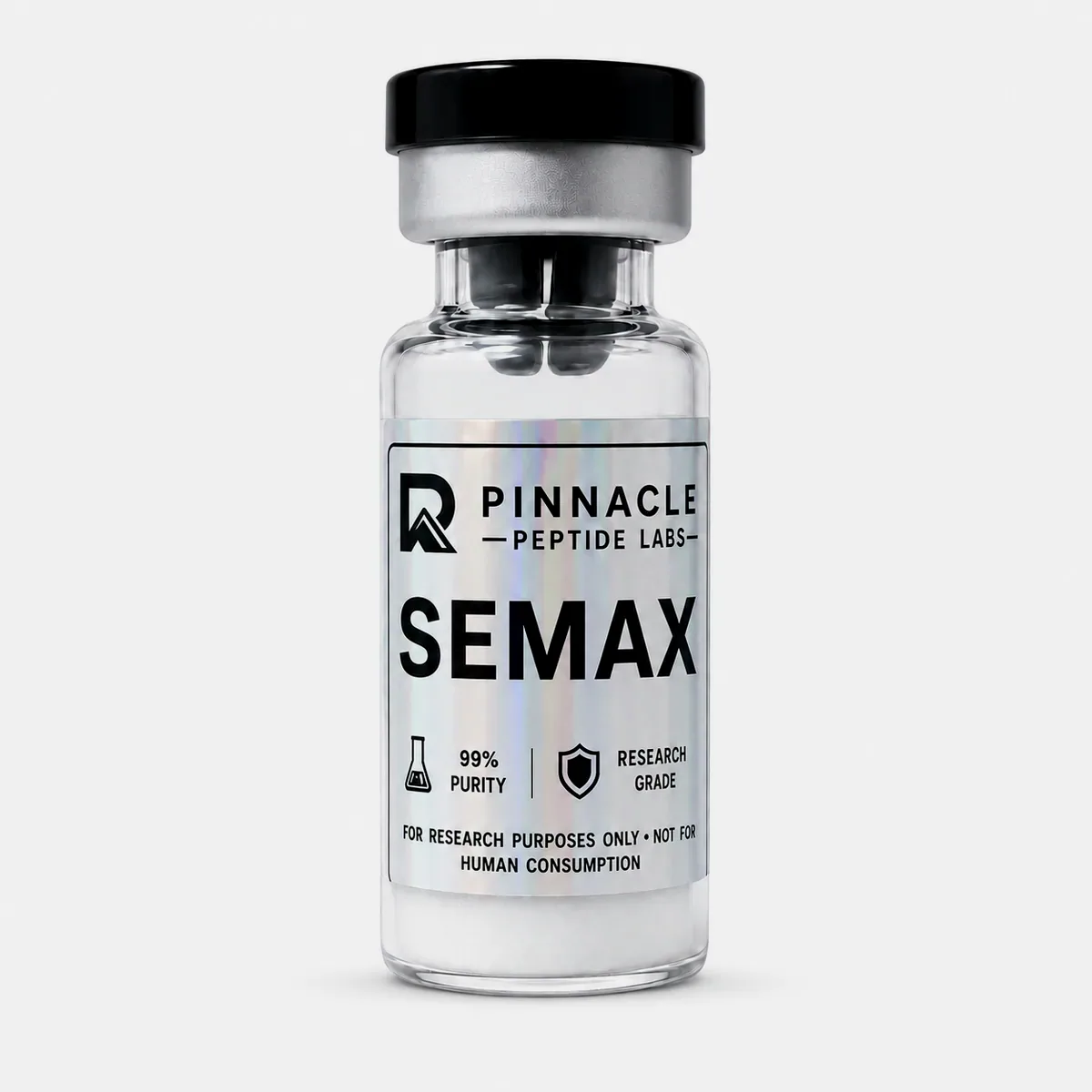
Semax 10mg
COA included, doctoral chemist tested
A heptapeptide ACTH(4-7) analog studied within neurotrophic (BDNF) signaling and neuroprotection research.
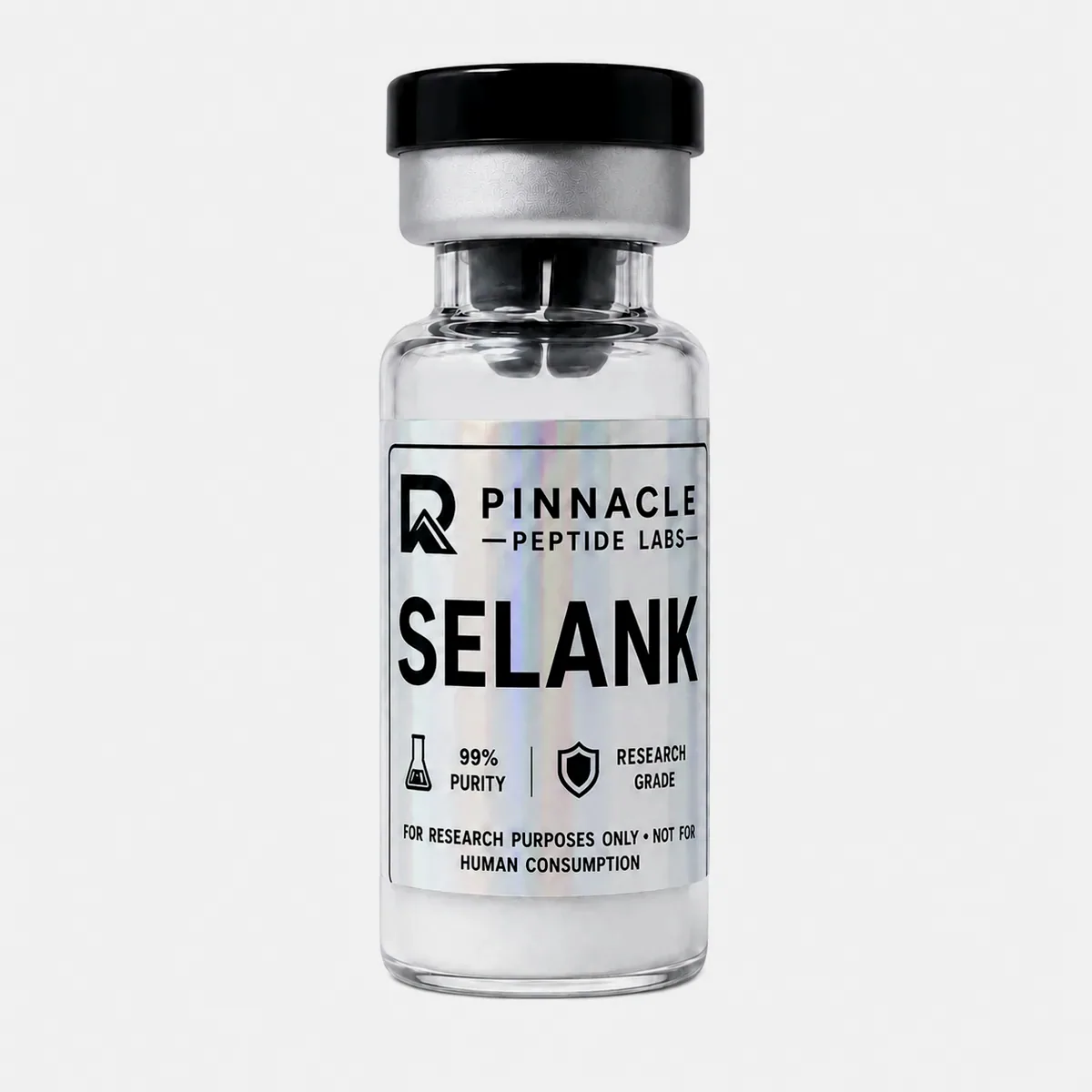
Selank 10mg
COA included, doctoral chemist tested
A tuftsin-analog heptapeptide studied within neuropeptide signaling and immunomodulation research.