Selank: Research Overview and Mechanism
Selank is a synthetic heptapeptide studied in laboratory and preclinical research within neuropeptide signaling, GABAergic and monoaminergic pathways, and tuftsin-related immunomodulation. Its N-terminal segment corresponds to the immunopeptide tuftsin, extended with a proline-glycine-proline sequence that resists enzymatic degradation. It is supplied as a lyophilized powder for research use only and is not approved for human use.
What Selank is
Selank is a synthetic heptapeptide (sequence TKPRPGP) whose N-terminal tetrapeptide is tuftsin, a naturally occurring immunomodulatory peptide, extended at the C-terminus with a proline-glycine-proline sequence. That proline-rich extension is studied as a stabilizing motif: it slows cleavage by peptidases and gives Selank a longer research half-life than native tuftsin, which is otherwise short-lived. It was developed in Russia at the Institute of Molecular Genetics as a stabilized tuftsin analog.
This construction places Selank at the intersection of neuropeptide and immunopeptide research, and it is used as a compact tool compound for probing both signaling areas in laboratory models.
Pathways it is studied within
In research, Selank is investigated within GABAergic and monoaminergic neurotransmission and within tuftsin-related immunomodulation. Preclinical literature has examined its association with GABA-mediated signaling, with the metabolism of serotonin and other monoamines, and with expression of brain-derived neurotrophic factor (BDNF) in CNS models. As a tuftsin analog it is separately studied for effects on cytokine and interleukin expression, and it is reported to influence the activity of enkephalin-degrading enzymes, which is one proposed route by which it stabilizes endogenous regulatory peptides. It is frequently referenced alongside the ACTH-derived peptide Semax as a complementary CNS tool compound.
Beyond preclinical work, Selank has a public clinical research record in Russia, where it has been examined in clinical studies within generalized anxiety disorder and related anxiety endpoints and is described in Russian sources as a registered anxiolytic. This states the third-person research and regulatory record and is not a human-use claim for the material supplied here. These descriptions refer to research applications reported in neuropeptide and immunopeptide literature, not to human outcomes.
Handling and documentation
Pinnacle Selank ships as a 10mg lyophilized powder of the heptapeptide TKPRPGP (molecular formula C33H57N11O9, near 752 g/mol). As a short, unmodified peptide it lacks the disulfide bridges or acylation that stabilize larger constructs, so it dissolves readily in bacteriostatic water but is best aliquoted to limit freeze-thaw once in solution. Store the sealed vial at -20°C protected from light, add solvent gently against the vial wall rather than onto the pellet, then refrigerate the solution and reconcile identity against the lot-matched Certificate of Analysis, which reports 99% or higher purity by HPLC and mass spectrometry.
All products are intended strictly for in-vitro laboratory research and development use only. Not for human or veterinary use, not a drug, food, or cosmetic, and not intended to diagnose, treat, cure, or prevent any disease.
Related research peptides
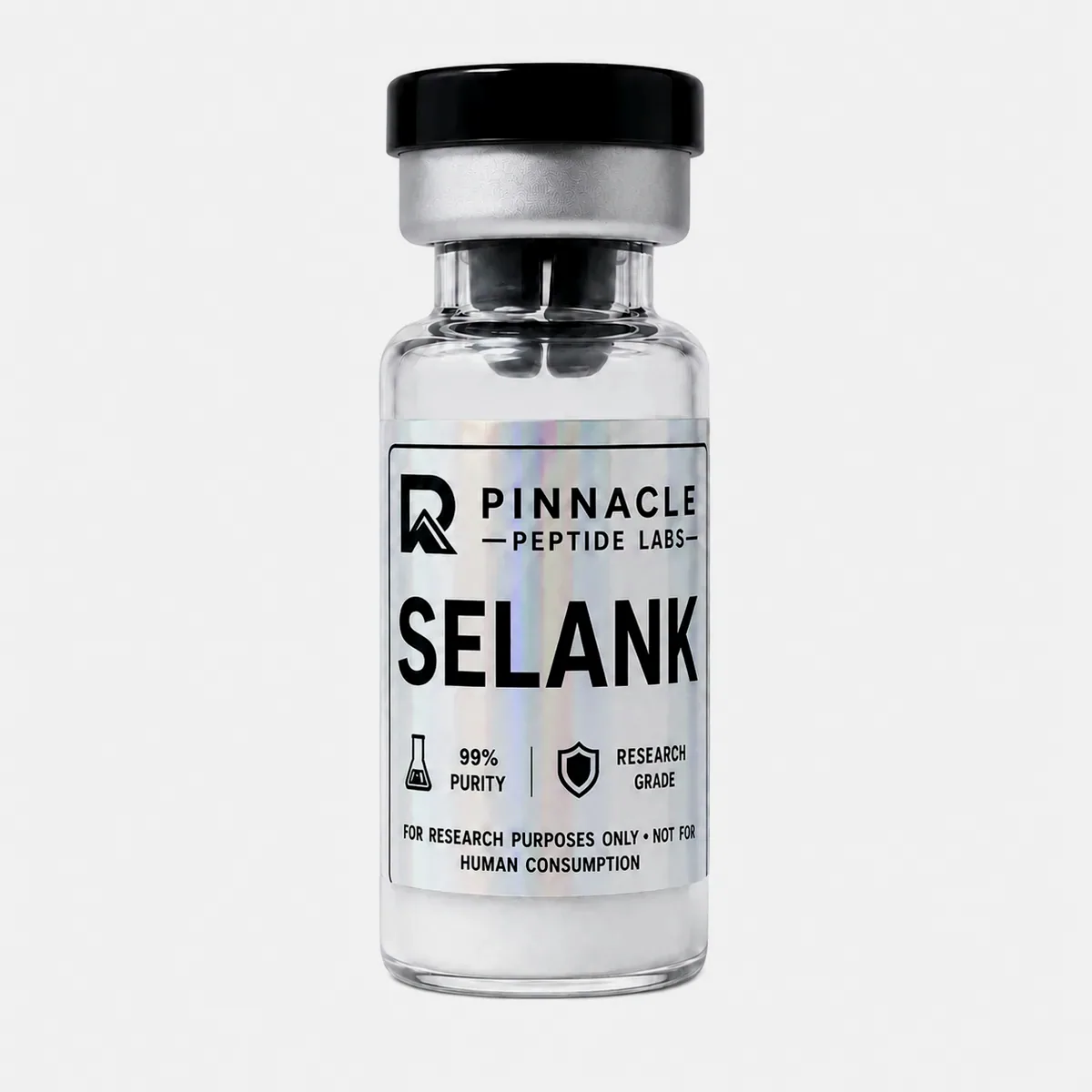
Selank 10mg
COA included, doctoral chemist tested
A tuftsin-analog heptapeptide studied within neuropeptide signaling and immunomodulation research.
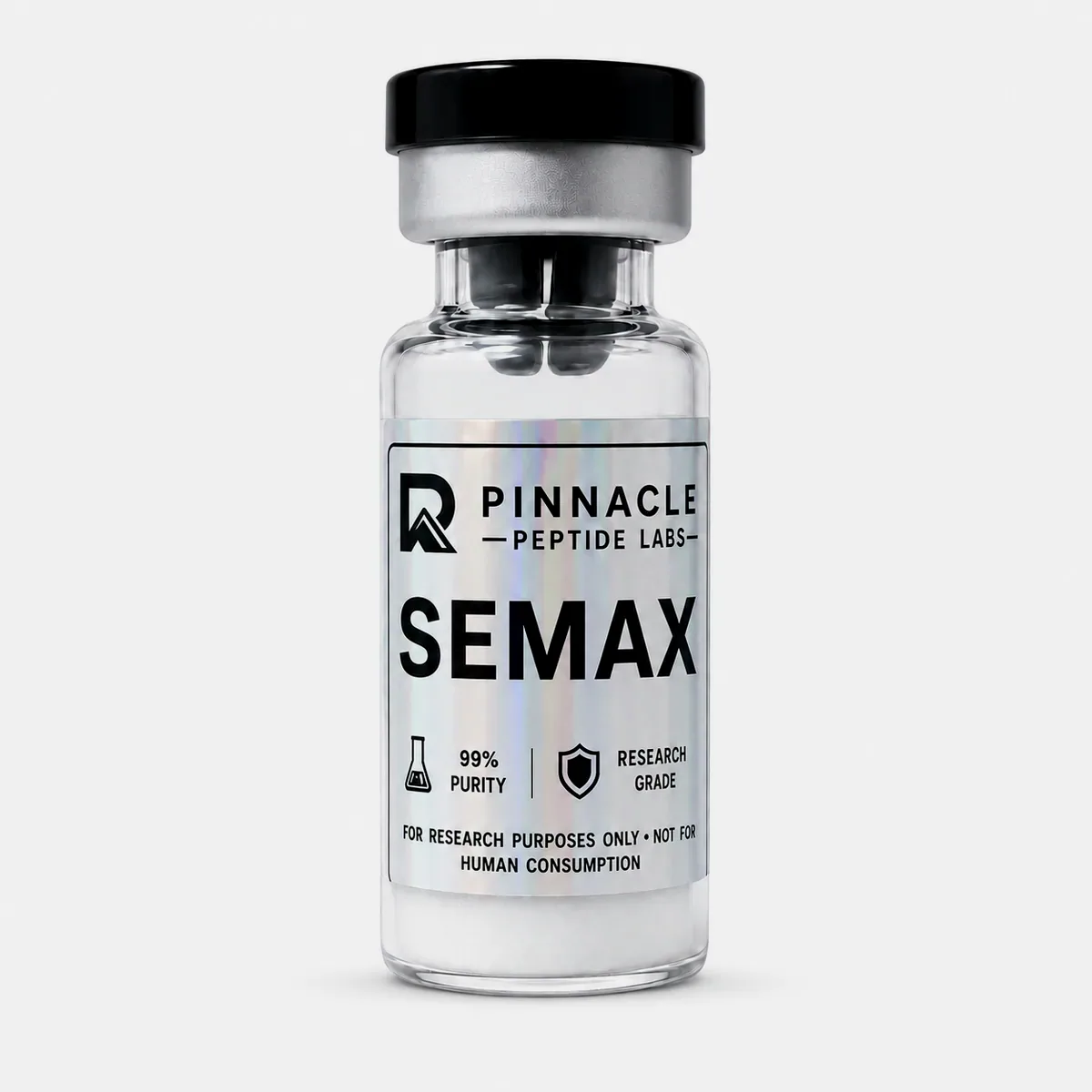
Semax 10mg
COA included, doctoral chemist tested
A heptapeptide ACTH(4-7) analog studied within neurotrophic (BDNF) signaling and neuroprotection research.