P21: Research Overview and Mechanism
P21 (also written P021) is an adamantylated peptidomimetic derived from an active region of ciliary neurotrophic factor (CNTF), studied in laboratory and preclinical research within neurotrophic signaling, BDNF induction, neurogenesis, and synaptic-plasticity models. It is supplied as a lyophilized powder for research use only and is not approved for human use.
What P21 is
P21 is a peptidomimetic (sequence Ac-DGGL-(adamantyl-Gly)-NH2) derived from an active region of ciliary neurotrophic factor (CNTF). Its C-terminal residue is an adamantyl-modified group rather than a standard amino acid, so it mimics a short peptide while carrying a non-natural modification, which is why it is classed as a peptidomimetic rather than a conventional peptide.
The adamantane cage is a lipophilic modification studied for improving metabolic stability and central availability relative to an unmodified tetrapeptide, which is what makes P21 a practical tool compound for probing neurotrophic pathways in CNS research.
Pathways it is studied within
In research, P21 is investigated as a neurotrophic mimetic within neurotrophic signaling, neurogenesis, and synaptic-plasticity models. Because it derives from a CNTF fragment, preclinical neuroscience literature, including transgenic Alzheimer's-disease model work, has examined its association with induction of brain-derived neurotrophic factor (BDNF), with increased neurogenesis in the hippocampal dentate gyrus, and with markers of dendritic and synaptic integrity.
These descriptions refer to preclinical neuroscience research findings, not to human effects, and the material here is supplied strictly for laboratory research and is not approved for human use.
Handling and documentation
Pinnacle P21 ships as a 10mg lyophilized powder of the peptidomimetic Ac-DGGL-(adamantyl-Gly)-NH2 (molecular formula C27H42N6O8, near 579 g/mol). Its C-terminal adamantyl cage makes the molecule more lipophilic than a plain tetrapeptide, so full dissolution in bacteriostatic water can require gentle, patient swirling, and the exact construct should be confirmed against the lot-matched Certificate of Analysis. Store the sealed vial at -20°C protected from light, refrigerate the reconstituted solution, and keep freeze-thaw cycles to a minimum. Every batch is doctoral chemist tested by HPLC and mass spectrometry.
All products are intended strictly for in-vitro laboratory research and development use only. Not for human or veterinary use, not a drug, food, or cosmetic, and not intended to diagnose, treat, cure, or prevent any disease.
Related research peptides
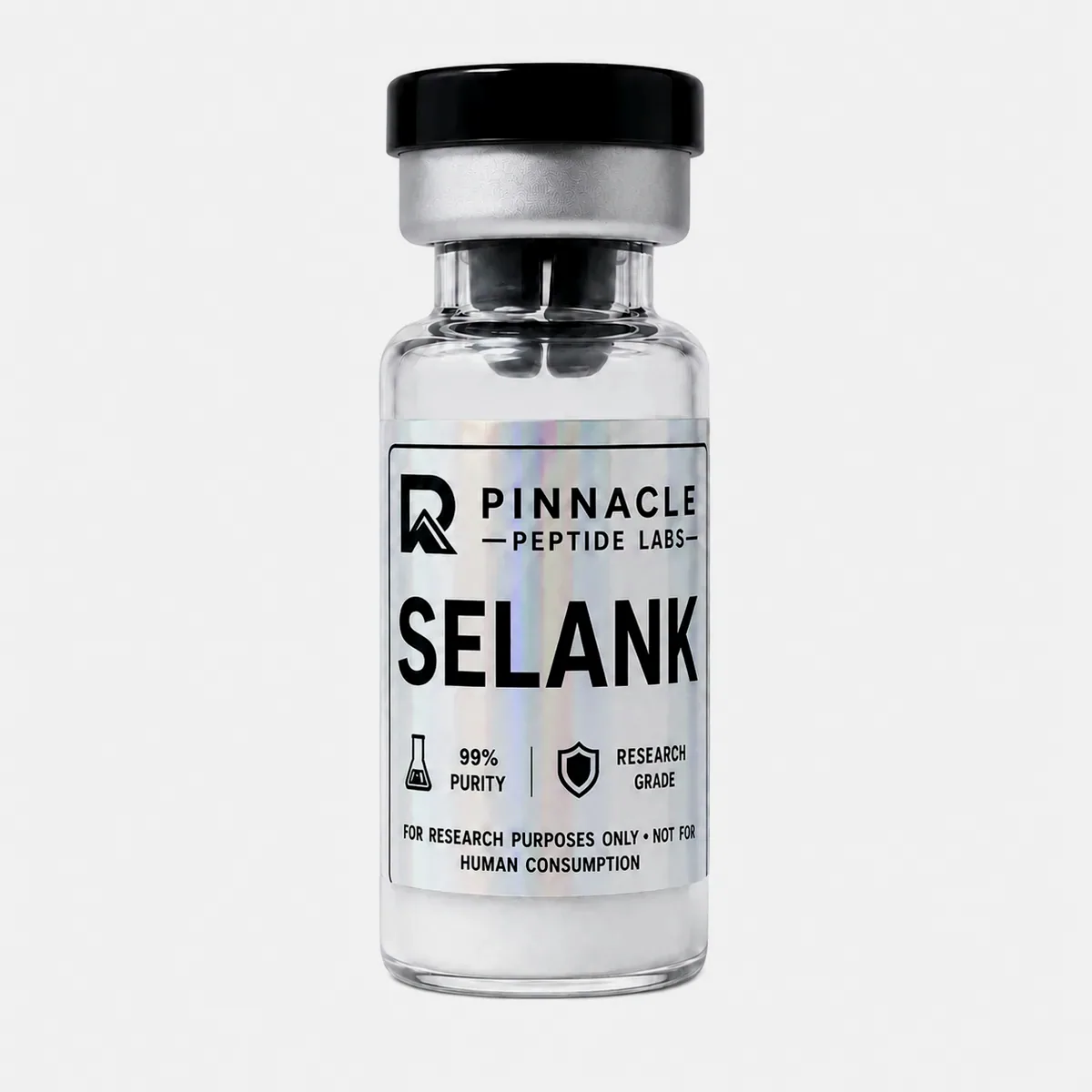
Selank 10mg
COA included, doctoral chemist tested
A tuftsin-analog heptapeptide studied within neuropeptide signaling and immunomodulation research.
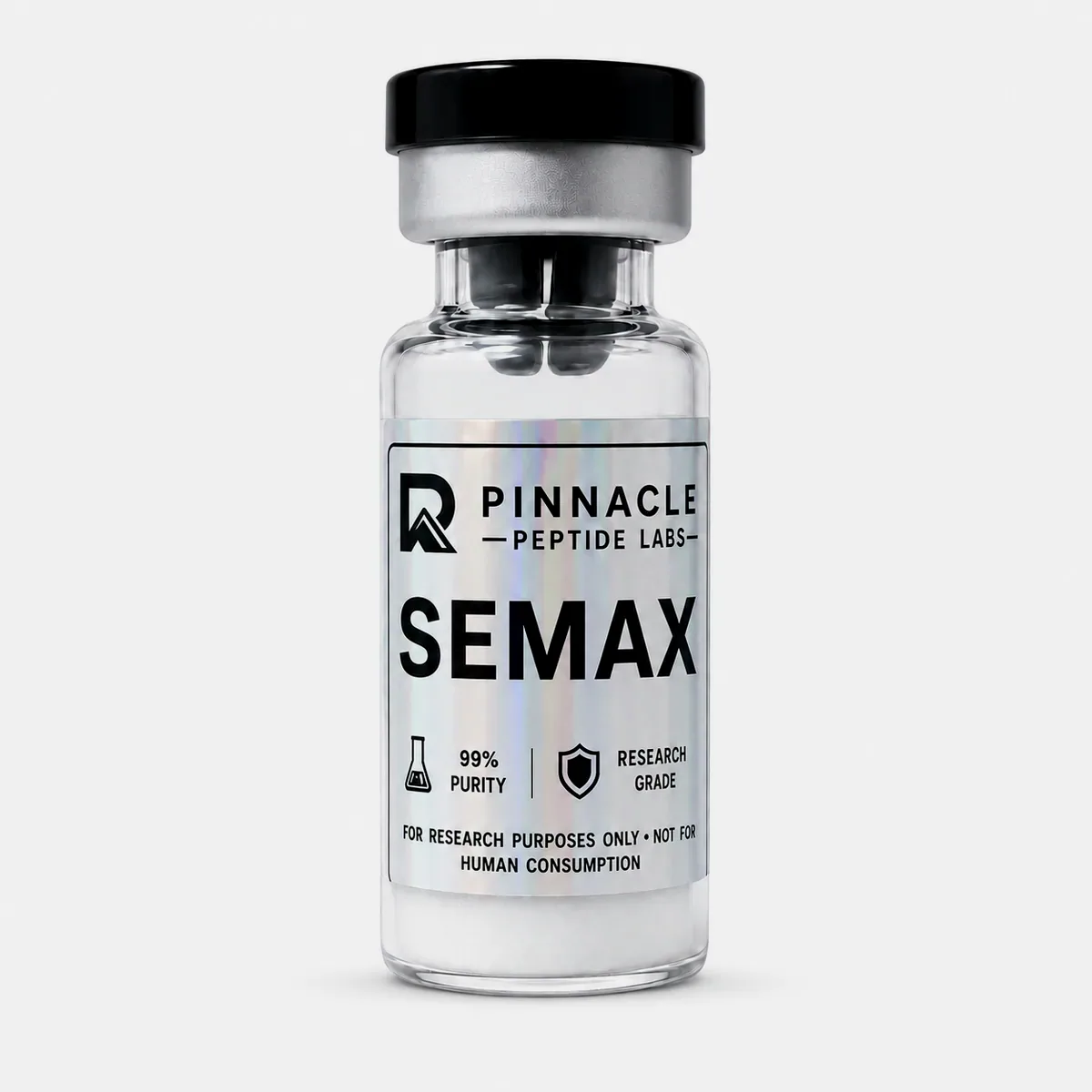
Semax 10mg
COA included, doctoral chemist tested
A heptapeptide ACTH(4-7) analog studied within neurotrophic (BDNF) signaling and neuroprotection research.