What Is Bacteriostatic Water? A Research Peptide Guide
Bacteriostatic water is sterile water that contains a small amount of benzyl alcohol, an additive that inhibits the growth of bacteria so a vial can be accessed more than once without the contents supporting microbial growth. In laboratory research it is a common general-purpose diluent for reconstituting lyophilized peptides, precisely because a multi-use solution needs that protection. It is not universal, though: some peptides require a different solvent for full solubility, so the correct choice depends on the compound and the research protocol.
What bacteriostatic water is
Bacteriostatic water is purified, sterile water with a low concentration of benzyl alcohol added as a preservative. The word bacteriostatic describes what that preservative does: it holds bacterial growth in check (static) rather than actively sterilizing an already-contaminated solution. The base is ordinary water for injection; the benzyl alcohol is the functional difference.
That single additive is why the fluid behaves differently from plain water once a vial has been opened and accessed. It is the reason bacteriostatic water is the default diluent many research protocols reach for when a peptide will be drawn from the same vial across several sessions.
Why the benzyl alcohol matters for a multi-use vial
A lyophilized research peptide is often reconstituted once and then used gradually. Every time a vial is accessed, there is an opportunity to introduce microorganisms. Plain sterile water offers no ongoing protection against that, so a solution made with it is best treated as single-use.
The benzyl alcohol in bacteriostatic water suppresses microbial growth between accesses, which is what makes a multi-use vial practical without the solution becoming a growth medium. This is a handling and stability consideration for research material, not a statement about any use in humans or animals.
Bacteriostatic water versus sterile water versus other solvents
Sterile water (water for injection) is bacteriostatic water without the preservative. It is suitable when a solution is made and used immediately, but it does not protect a vial that will be reopened. Bacteriostatic water trades a longer usable window for the presence of the benzyl alcohol additive.
Beyond these two, some protocols call for other diluents entirely: dilute acetic acid for peptides that are poorly soluble in neutral water, or specific buffers where the research requires a controlled pH. The right solvent is a property of the peptide and the experiment, not a one-size-fits-all rule.
When a different solvent is required
Some peptides simply do not dissolve fully in water, whatever preservative it contains. Highly hydrophobic sequences, or peptides with a strong tendency to aggregate, may need an acidic or specialized solvent to go fully into solution before the stock is diluted further.
When solubility is in doubt, follow the compound-specific reconstitution guidance rather than assuming bacteriostatic water will work. If a powder resists dissolving, the answer is usually the wrong solvent for that peptide, not a fault in the material. Our reconstitution and storage guide covers the technique itself in detail.
All products are intended strictly for in-vitro laboratory research and development use only. Not for human or veterinary use, not a drug, food, or cosmetic, and not intended to diagnose, treat, cure, or prevent any disease.
Related research peptides
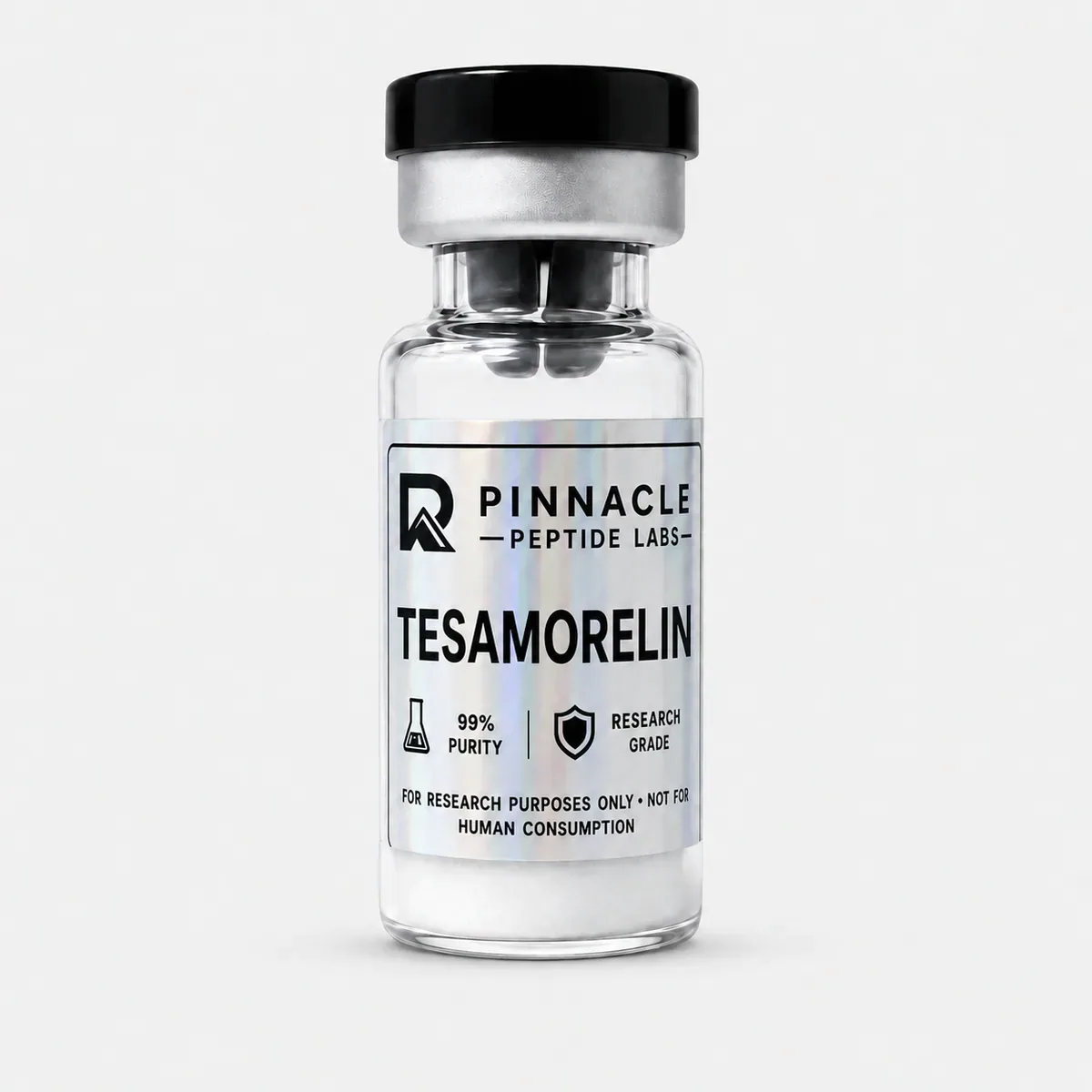
Tesamorelin 10mg
COA included, doctoral chemist tested
A stabilized growth hormone-releasing factor analog studied for its effects on GH secretion pathways in laboratory models.