What Are Research Peptides? A Complete Guide
Research peptides are short chains of amino acids (typically 2 to 50 residues) synthesized for use in controlled laboratory and preclinical research. They are supplied as lyophilized (freeze-dried) powder, reconstituted before study, and are intended strictly for in-vitro research use, not for human or veterinary consumption. Quality is defined by verified purity, confirmed molecular identity, and a batch-specific Certificate of Analysis from an independent laboratory.
What a peptide actually is
A peptide is a molecule built from amino acids linked by peptide bonds. Where proteins are large and complex, peptides are short, which makes them easier to synthesize precisely and to characterize analytically. In research, a peptide's exact amino acid sequence is what determines the receptor it interacts with and the pathway it is used to study.
Research peptides are produced by solid-phase peptide synthesis (SPPS), a stepwise process that builds the chain one amino acid at a time. The output is then purified, most often by high-performance liquid chromatography (HPLC), and its identity is confirmed by mass spectrometry.
What research peptides are studied for
In laboratory and preclinical settings, peptides are used as tools to probe specific biological pathways: receptor binding, signaling cascades, metabolic regulation, tissue-repair mechanisms, and more. Because a peptide can be designed to target a single receptor family with high selectivity, it is a precise instrument for isolating one variable in an experiment.
Every description of a compound on this site refers to what it is studied for in research models. None of it is a claim of a therapeutic effect in humans, and none of these products are approved for human use.
Why purity and documentation matter
The single most important quality attribute of a research peptide is purity: the percentage of the material that is the intended peptide rather than truncated sequences, deletion products, or residual synthesis reagents. Impurities introduce confounding variables that undermine reproducibility.
Purity is only meaningful if it is independently measured. A Certificate of Analysis (COA) from a third-party laboratory reports the measured purity (by HPLC) and confirms molecular identity (by mass spectrometry) for a specific production lot. A supplier that publishes lot-matched COAs lets you verify the material before you ever reconstitute it.
How to evaluate a research peptide supplier
Look for third-party (not in-house) testing, COAs matched to the exact lot number on your vial, a stated purity threshold, clear reconstitution and storage guidance, and transparent research-use-only positioning. Suppliers who make human-use or dosing claims are a red flag both for compliance and for credibility.
Our companion guide on reading a Certificate of Analysis walks through exactly how to interpret one of these reports line by line.
All products are intended strictly for in-vitro laboratory research and development use only. Not for human or veterinary use, not a drug, food, or cosmetic, and not intended to diagnose, treat, cure, or prevent any disease.
Related research peptides
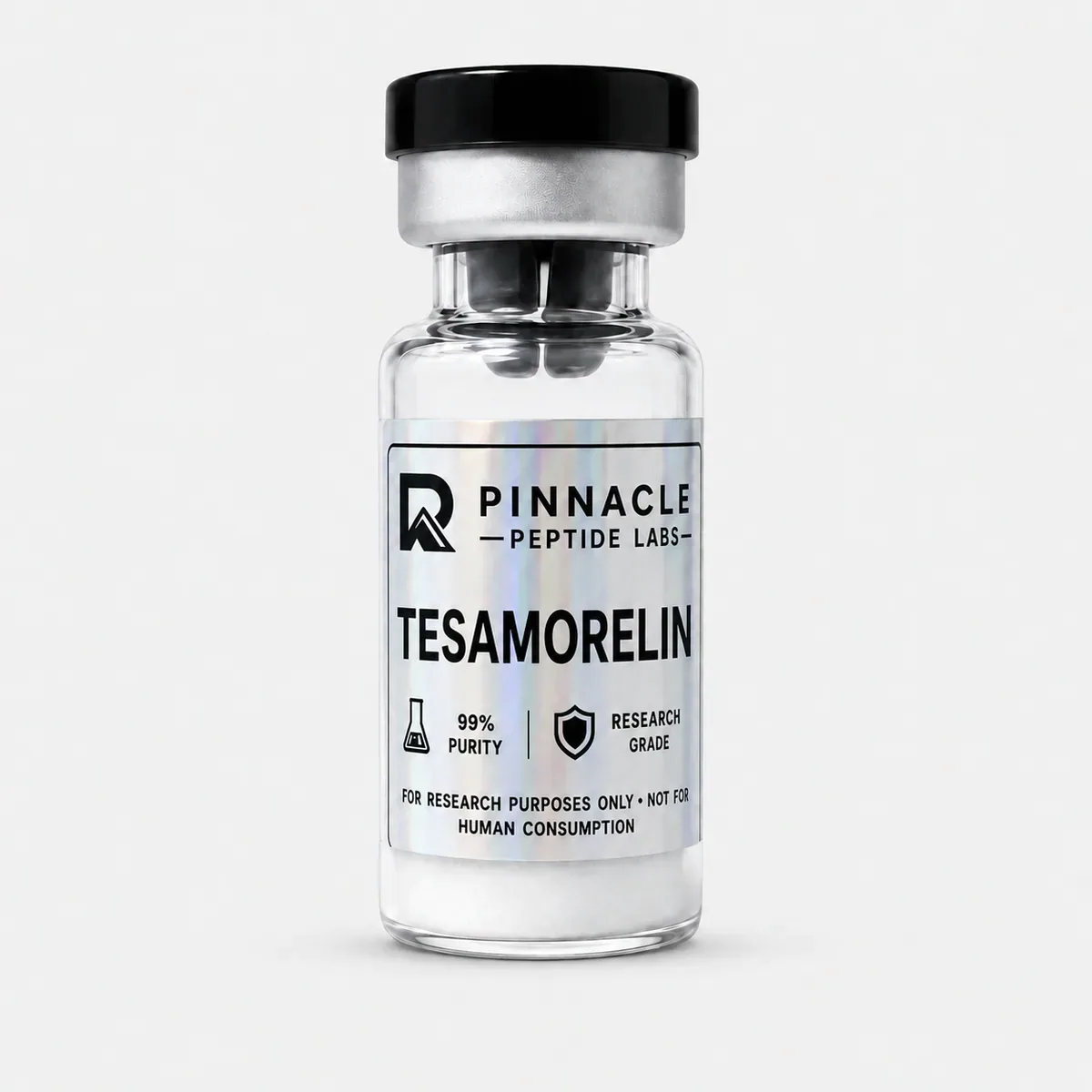
Tesamorelin 10mg
COA included, doctoral chemist tested
A stabilized growth hormone-releasing factor analog studied for its effects on GH secretion pathways in laboratory models.
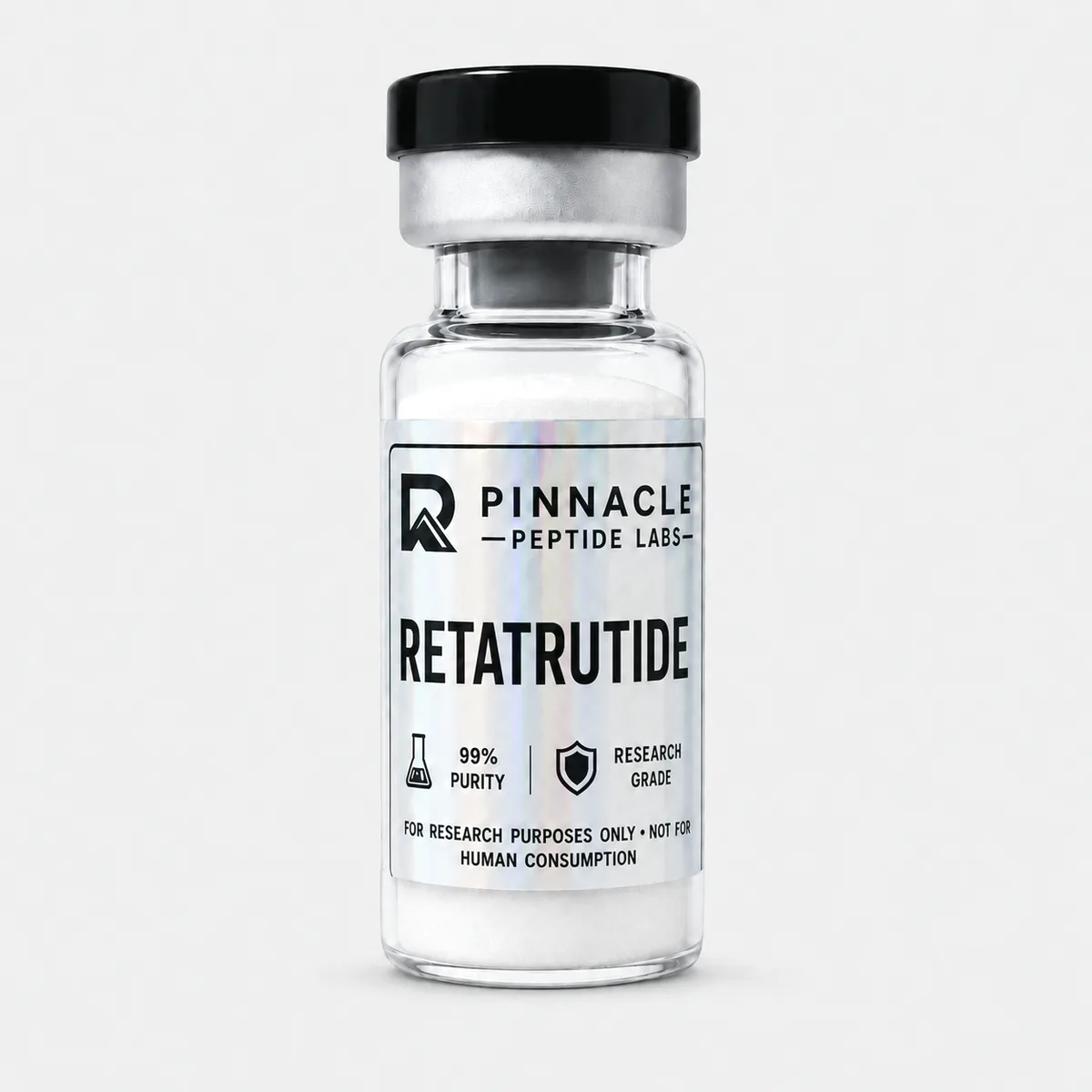
GLP-3RT 20mg
COA included, doctoral chemist tested
A next-generation triple-receptor agonist studied within metabolic, glucose-regulation, and energy-homeostasis research pathways.