Peptide Purity Explained: What 99% Actually Means
Peptide purity is the percentage of a sample that is the intended peptide rather than impurities such as truncated or deletion sequences and residual reagents, measured by HPLC. A stated purity of 99% means that, by HPLC peak area, 99% of the material is the target peptide. Higher and more consistent purity reduces confounding variables and improves the reproducibility of research results.
How purity is measured
Purity is quantified by high-performance liquid chromatography (HPLC). The sample is separated into its components, and the target peptide appears as the dominant peak. Purity is reported as that peak's area as a percentage of all peaks. A figure like 99% is therefore a peak-area measurement, not an abstract grade.
Where impurities come from
During synthesis, some chains fail to add an amino acid at a given step, producing truncated or deletion sequences that closely resemble the target. Other impurities include residual solvents, reagents, and counter-ions. Purification removes most of these, and the COA reports what remains.
Why it matters for research
Impurities are uncontrolled variables. If a batch varies in what else it contains, results vary for reasons unrelated to the hypothesis. Consistent, verified, high purity is what makes one experiment comparable to the next, which is the entire point of characterized research material.
All products are intended strictly for in-vitro laboratory research and development use only. Not for human or veterinary use, not a drug, food, or cosmetic, and not intended to diagnose, treat, cure, or prevent any disease.
Related research peptides
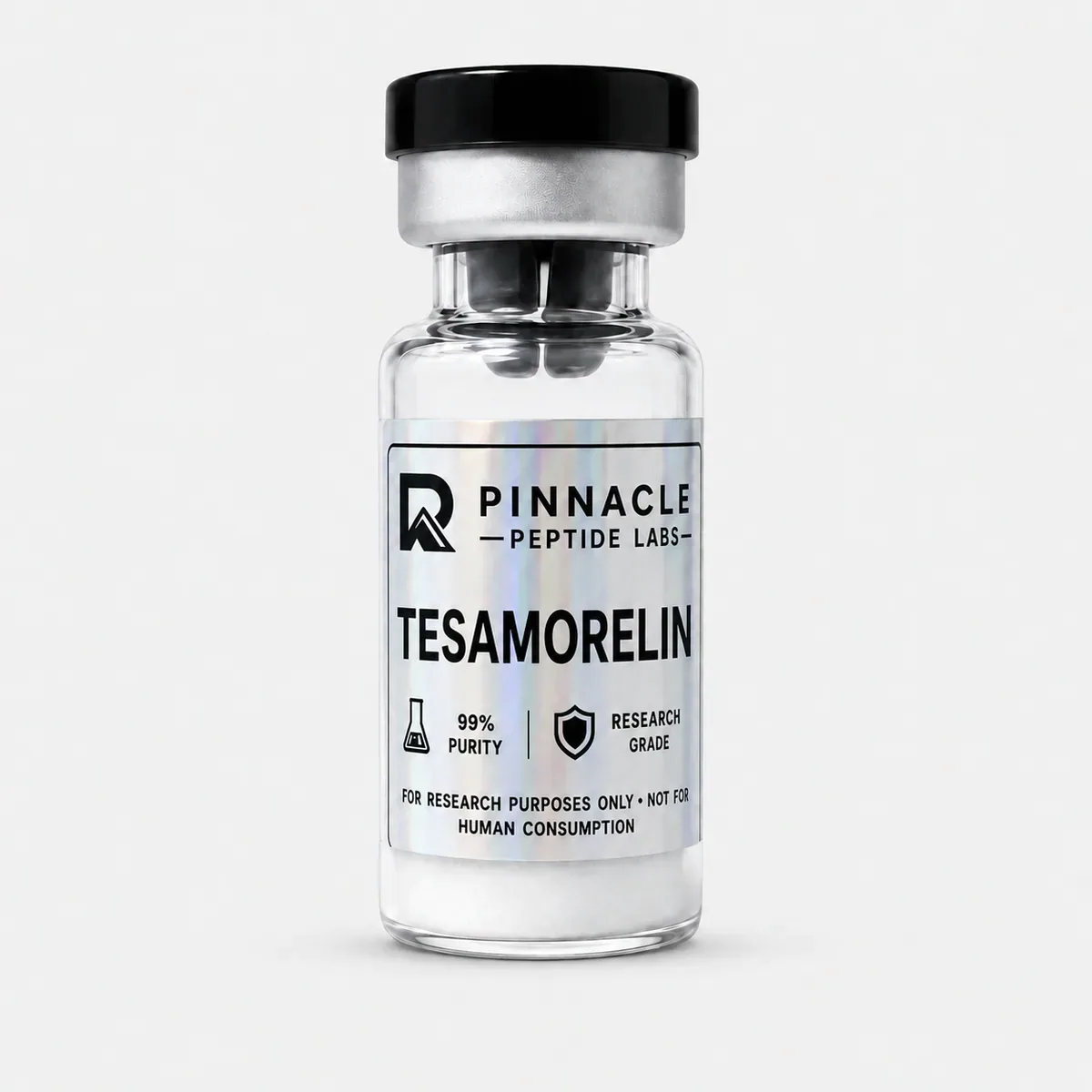
Tesamorelin 10mg
COA included, doctoral chemist tested
A stabilized growth hormone-releasing factor analog studied for its effects on GH secretion pathways in laboratory models.
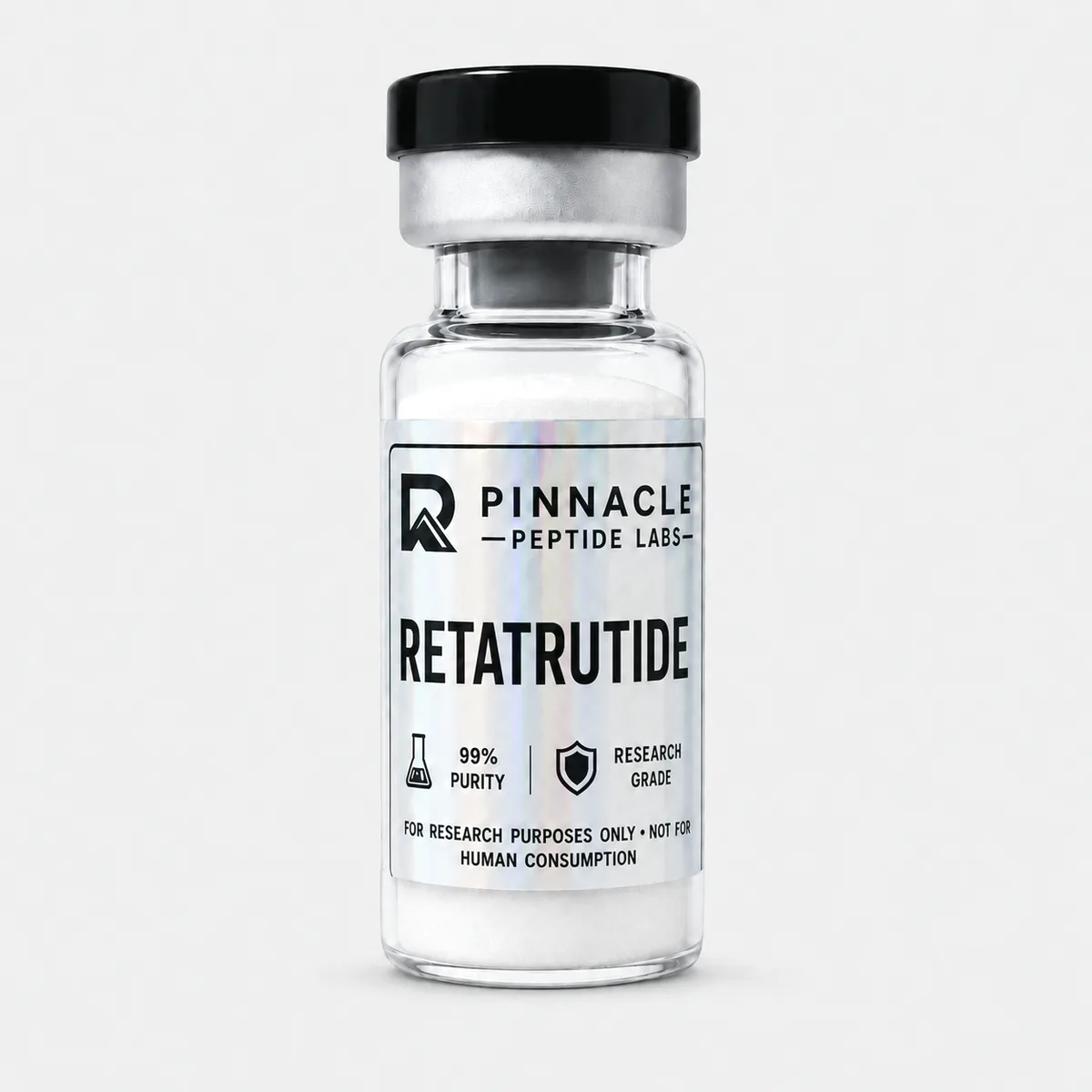
GLP-3RT 20mg
COA included, doctoral chemist tested
A next-generation triple-receptor agonist studied within metabolic, glucose-regulation, and energy-homeostasis research pathways.