MOTS-C: Research Overview and Mechanism
MOTS-c is a 16-residue mitochondrial-derived peptide studied in laboratory and preclinical research for its association with AMPK signaling and metabolic homeostasis. Encoded within the mitochondrial 12S rRNA region, it is used as a tool compound in cellular-metabolism and mitochondrial-biology research. It is supplied as a lyophilized powder for research use only and is not approved for human use.
What MOTS-C is
MOTS-c (mitochondrial open reading frame of the 12S rRNA type-c) is a 16-amino-acid peptide encoded within the mitochondrial genome rather than the nuclear genome. That origin is why it is classified as a mitochondrial-derived peptide, a small but growing class of tool compounds studied in mitochondrial-signaling research.
In research it is used to probe how the mitochondrion communicates metabolic state to the rest of the cell, making it a compact instrument for studying mitochondrial-to-nuclear signaling in cellular-metabolism models.
Pathways it is studied within
MOTS-c is studied for its association with AMPK (AMP-activated protein kinase) signaling, a central regulator of cellular energy balance, and with metabolic-homeostasis endpoints in preclinical models. In the mechanism reported in that literature, MOTS-c is described as modulating the folate-methionine cycle and de novo purine biosynthesis, which promotes accumulation of the metabolite AICAR, an endogenous activator of AMPK. Research also examines its reported movement from the mitochondrion to the nucleus under metabolic stress, where it associates with stress-response transcription factors and is studied in the context of gene-expression regulation.
These are described as research applications reported in the literature, not human effects. The compound is used as a tool for isolating mitochondrial contributions to cellular metabolism.
Research literature
MOTS-c was first described by Lee and colleagues in a 2015 report in Cell Metabolism that characterized it as a mitochondrial-derived peptide associated with AMPK activation and metabolic homeostasis in preclinical models. A later 2018 report in Cell Metabolism examined its translocation to the nucleus to regulate gene expression under metabolic stress. This overview refers to that research record and does not describe a human effect.
Handling and documentation
Pinnacle MOTS-C is supplied as a 10mg lyophilized powder of the 16-residue sequence MRWQEMGYIFYPRKLR (near 2175 g/mol). Store it at -20°C protected from light and reconstitute with bacteriostatic water; because peptides tolerate repeated freezing poorly once in solution, aliquot and minimize freeze-thaw cycles to preserve integrity for reproducible research. Every batch is doctoral chemist tested by HPLC and mass spectrometry and ships with a lot-matched Certificate of Analysis confirming identity and purity.
All products are intended strictly for in-vitro laboratory research and development use only. Not for human or veterinary use, not a drug, food, or cosmetic, and not intended to diagnose, treat, cure, or prevent any disease.
Related research peptides
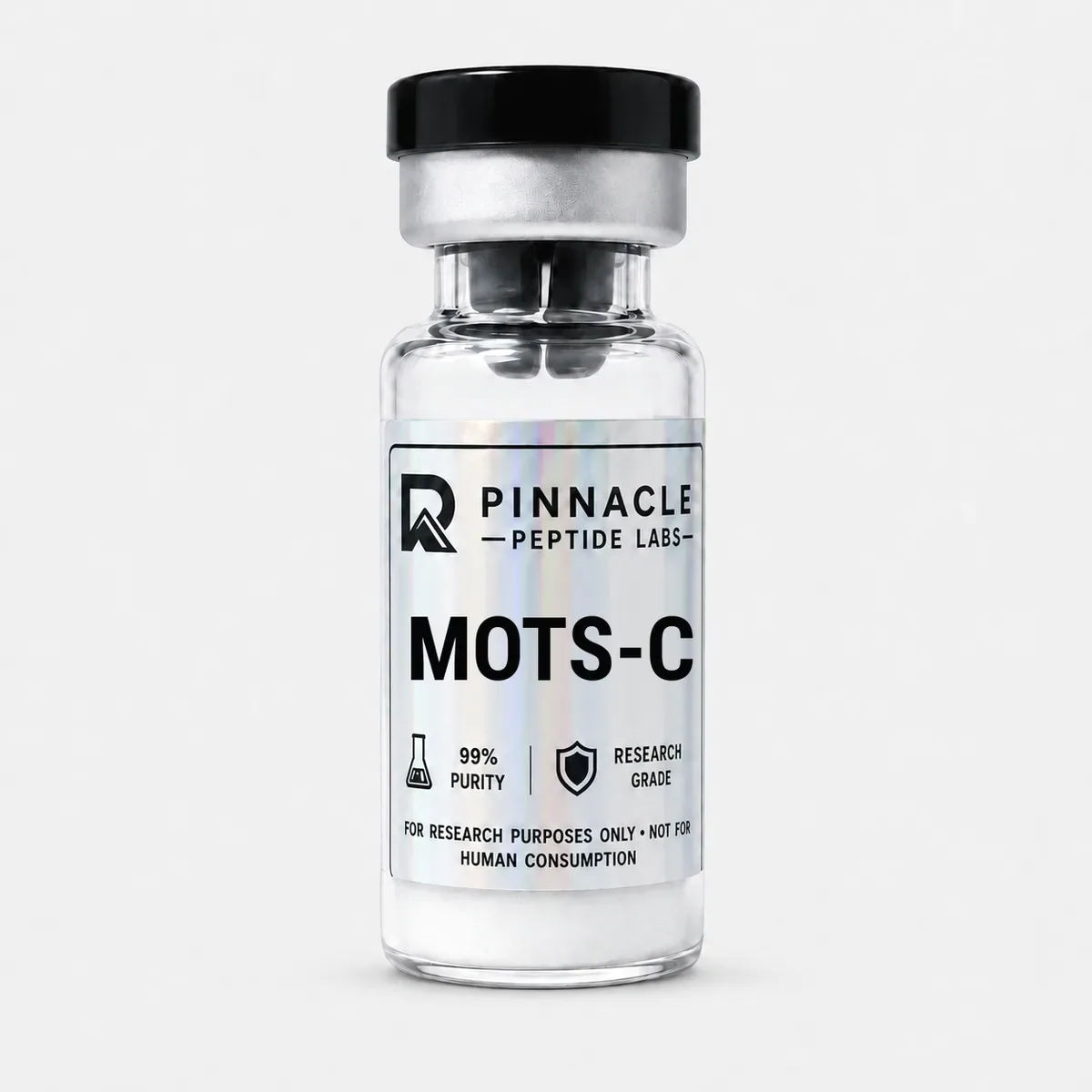
MOTS-C 10mg
COA included, doctoral chemist tested
A 16-residue mitochondrial-derived peptide studied within cellular-metabolism and AMPK-signaling research.
NAD+ 500mg
COA included, doctoral chemist tested
A coenzyme central to cellular metabolism and redox biology, studied within mitochondrial and sirtuin research.