SS-31 vs MOTS-C: A Research Comparison
SS-31 and MOTS-C are both studied in mitochondrial research but relate to the mitochondrion in different ways. SS-31 is a synthetic mitochondria-targeted tetrapeptide studied for cardiolipin binding and bioenergetics; MOTS-C is a peptide encoded within the mitochondrial genome itself, studied as an AMPK-linked signaling molecule. SS-31 has been carried into human clinical study, while MOTS-C is chiefly preclinical. The canonical difference is membrane targeting versus mitochondrial origin. Both are supplied for research use only.
The core difference: targeting vs origin
Both compounds sit within mitochondrial biology, but they relate to the organelle differently. SS-31 (elamipretide) is a synthetic tetrapeptide that concentrates at the inner mitochondrial membrane and associates with cardiolipin, a phospholipid essential to the electron-transport chain, where it is studied for stabilizing cristae structure and bioenergetics. MOTS-C is a peptide encoded within the mitochondrial 12S rRNA region of the mitochondrial genome, studied as a signaling molecule that influences AMPK activity and nuclear gene expression. One is a targeted synthetic membrane tool; the other is a mitochondrial-derived signaling peptide.
Structure and molecular profile
SS-31 (molecular weight near 639.8 g/mol) is a four-residue peptide containing a 2,6-dimethyltyrosine residue and an alternating aromatic-cationic motif that drives its mitochondrial targeting. MOTS-C (molecular weight near 2174.6 g/mol) is a 16-residue peptide encoded within mitochondrial DNA. Confirm salt forms against each Certificate of Analysis.
Clinical and regulatory context
SS-31 (elamipretide) has been studied in human clinical trials for mitochondrial disorders, including the TAZPOWER trial in Barth syndrome and the MMPOWER program in primary mitochondrial myopathy. In 2025 the FDA granted accelerated approval to elamipretide, marketed as Forzinity, for Barth syndrome; that approval describes a regulated pharmaceutical product for a specific indication, not the research material sold here. MOTS-C, by contrast, is an endogenous mitochondrial-derived peptide studied predominantly in preclinical metabolic and exercise-physiology models. The SS-31 and MOTS-C supplied here are research-use-only materials and are not that approved product.
How each is studied
Research with SS-31 examines cardiolipin binding, cristae stability, mitochondrial bioenergetics, and oxidative-stress models. Research with MOTS-C examines AMPK signaling, glucose and lipid metabolism, and the retrograde signaling by which mitochondria influence the nucleus. A protocol chooses SS-31 when inner-membrane targeting and bioenergetics are the focus, and MOTS-C when mitochondrial-derived signaling and metabolic regulation are the subject.
All products are intended strictly for in-vitro laboratory research and development use only. Not for human or veterinary use, not a drug, food, or cosmetic, and not intended to diagnose, treat, cure, or prevent any disease.
Related research peptides
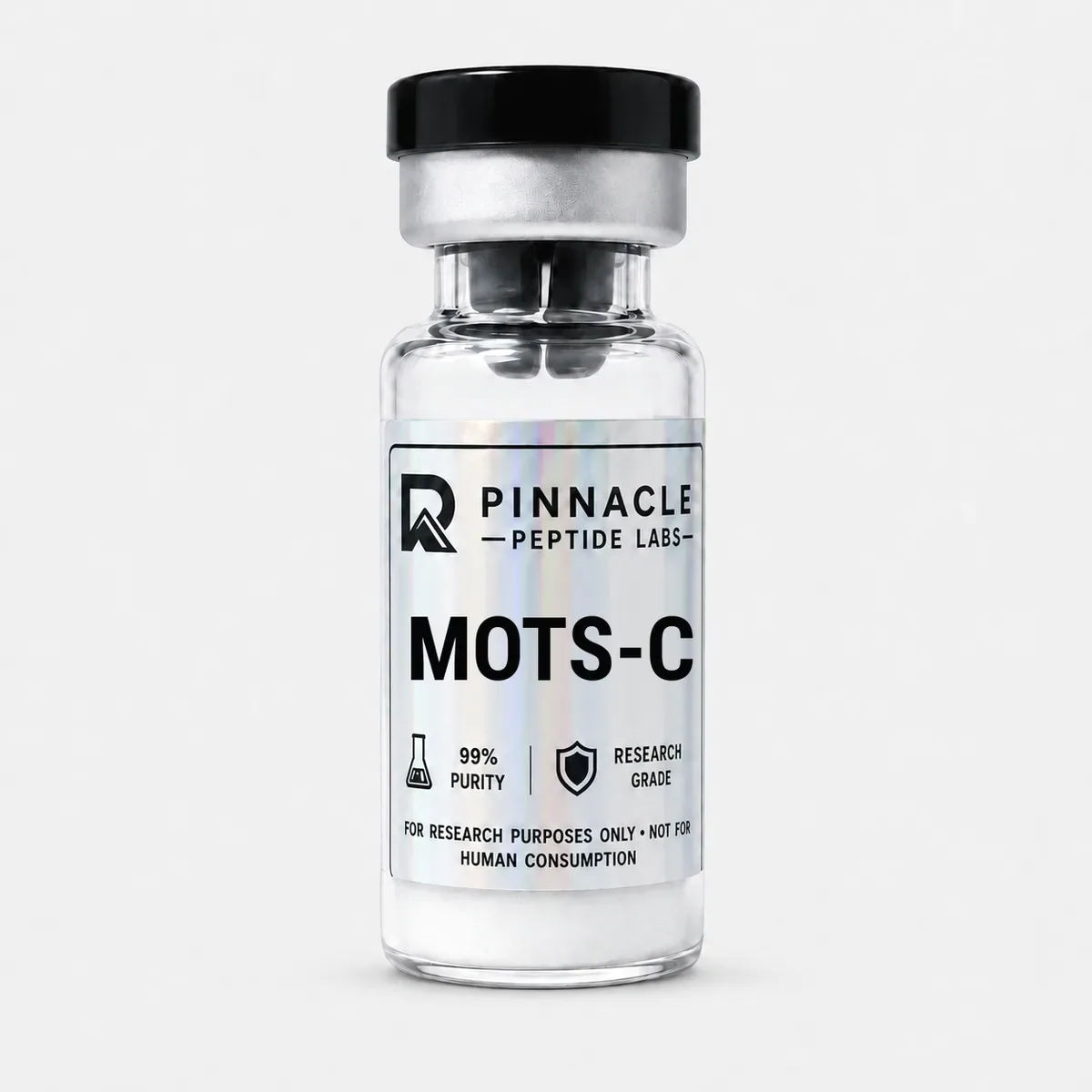
MOTS-C 10mg
COA included, doctoral chemist tested
A 16-residue mitochondrial-derived peptide studied within cellular-metabolism and AMPK-signaling research.