NAD+: Research Overview and Mechanism
NAD+ (nicotinamide adenine dinucleotide) is a dinucleotide coenzyme, not a peptide, studied in laboratory and preclinical research within cellular metabolism, redox biology, mitochondrial function, and sirtuin enzymology. It is used as a reference compound in energy-metabolism and DNA-repair research models. It is supplied for research use only and is not approved for human use, and this overview describes what it is studied for in research literature, not a therapeutic effect.
What NAD+ is
NAD+ is a coenzyme (molecular formula C21H27N7O14P2, near 663.4 g/mol) built from two nucleotides joined through their phosphate groups, one carrying a nicotinamide base and the other an adenine base. It is not a peptide and is not built from amino acids, which sets it apart from most of the compounds studied on this site.
In biochemistry it acts as an electron carrier, cycling between the oxidized form NAD+ and the reduced form NADH. It is also distinct from the phosphorylated coenzyme NADP, so the exact form and salt should be confirmed against the Certificate of Analysis before a value is used in research.
Pathways it is studied within
As a central coenzyme, NAD+ cycles between its oxidized and reduced forms to shuttle electrons through the redox reactions of glycolysis, the citric-acid cycle, and oxidative phosphorylation, which is why it is a reference compound in cellular-metabolism and mitochondrial-function research models.
Beyond that carrier role, NAD+ is consumed as a substrate by three enzyme families studied in longevity biology: the sirtuin deacylases, the poly(ADP-ribose) polymerases (PARPs) involved in DNA repair, and the glycohydrolase CD38. NAD+ metabolism, including supplementation with precursors such as nicotinamide riboside and nicotinamide mononucleotide, is an active subject of published human clinical research; that literature is reported here in the third person as the state of the research, not as an outcome claim.
Handling and documentation
Pinnacle NAD+ ships as a lyophilized powder with a lot-matched Certificate of Analysis. Because the oxidized (NAD+, near 663.4 g/mol, C21H27N7O14P2), reduced (NADH), and phosphorylated (NADP) forms are distinct molecules with different masses, confirm on the COA that the form and salt on the label match the intended value before any calculation.
The dinucleotide is hygroscopic and its oxidized form is sensitive to moisture, heat, and repeated freeze-thaw once in solution, so keep the sealed powder at -20C and shielded from light, reconstitute in bacteriostatic water only when needed, and refrigerate what you dissolve. Reconcile CAS 53-84-9 against the certificate.
All products are intended strictly for in-vitro laboratory research and development use only. Not for human or veterinary use, not a drug, food, or cosmetic, and not intended to diagnose, treat, cure, or prevent any disease.
Related research peptides
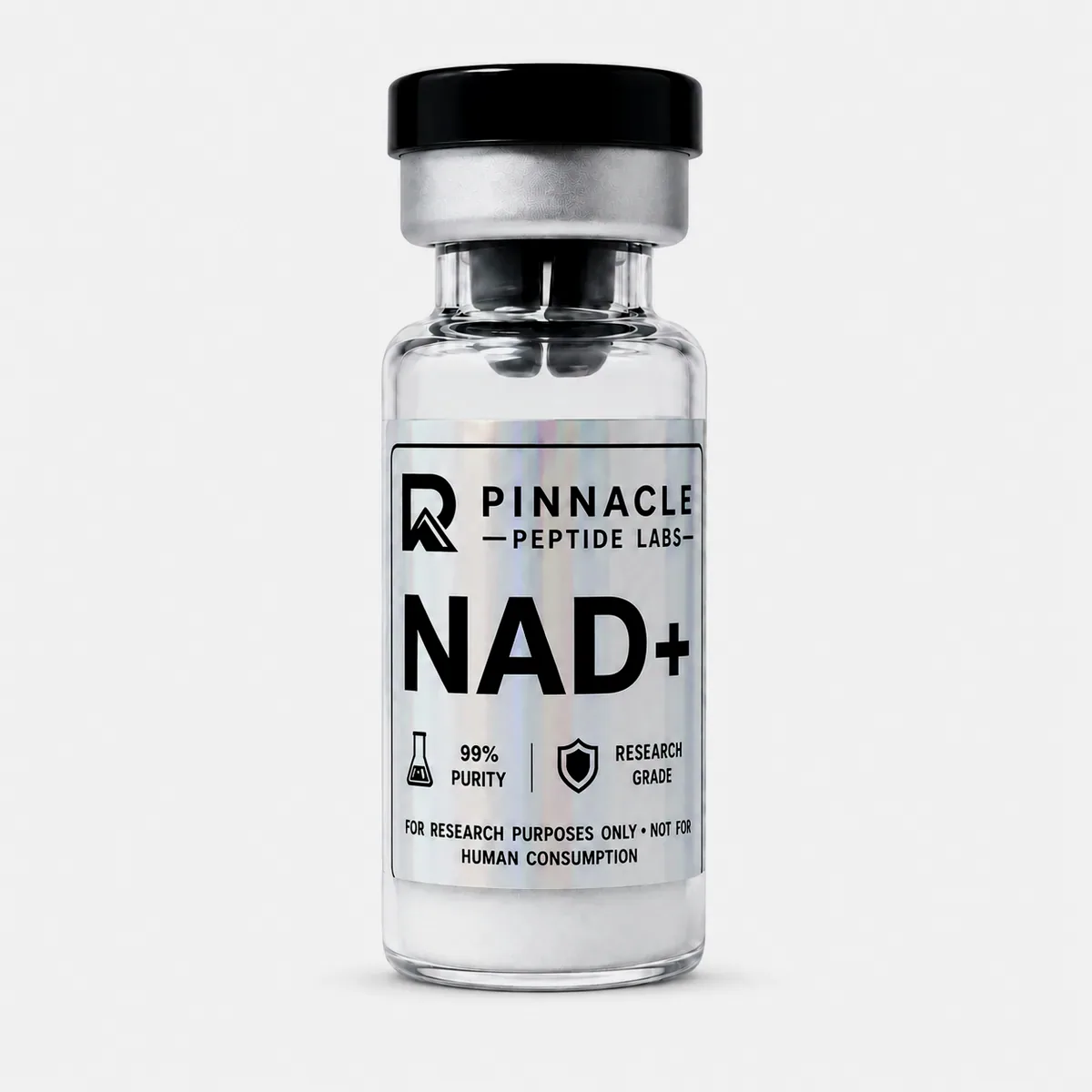
NAD+ 500mg
COA included, doctoral chemist tested
A coenzyme central to cellular metabolism and redox biology, studied within mitochondrial and sirtuin research.