5-Amino-1MQ: Research Overview and Mechanism
5-Amino-1MQ is a small-molecule inhibitor of the enzyme nicotinamide N-methyltransferase (NNMT), studied in laboratory and preclinical research for its association with NAD+ and nicotinamide metabolism. It is a non-peptide tool compound used in cellular-metabolism and adipocyte-biology research. It is supplied as a powder for research use only and is not approved for human use.
What 5-Amino-1MQ is
5-Amino-1MQ (5-amino-1-methylquinolinium) is a small-molecule quinolinium compound, not a peptide. In research it is studied as an inhibitor of nicotinamide N-methyltransferase (NNMT), an enzyme that methylates nicotinamide and sits within NAD+ and nicotinamide metabolism.
Because it is a small molecule rather than a lyophilized peptide, it is prepared per the research protocol rather than reconstituted like a peptide. The counterion matters: the iodide salt and the chloride salt differ in molecular weight, so the exact form should be confirmed against the supplier Certificate of Analysis.
Pathways it is studied within
Research using 5-Amino-1MQ examines NNMT enzyme inhibition and its downstream association with NAD+ and nicotinamide metabolism, primarily in cellular-metabolism and adipocyte-biology models. Mechanistically, NNMT transfers a methyl group from S-adenosylmethionine (SAM), the cell's principal methyl donor, onto nicotinamide, yielding 1-methylnicotinamide and S-adenosylhomocysteine. Because nicotinamide is also a precursor in the NAD+ salvage pathway, NNMT activity is studied as a node connecting cellular methylation capacity, NAD+ handling, and energy metabolism, which is why a small-molecule inhibitor is a useful tool for isolating that enzyme's contribution.
These are described as research applications reported in the literature, not human effects. The compound is used to probe NNMT-dependent pathways in preclinical settings.
Research literature
The profile of 5-Amino-1MQ as an NNMT inhibitor was described by Neelakantan and colleagues in a 2018 report in Biochemical Pharmacology that examined small-molecule inhibition of nicotinamide N-methyltransferase in preclinical adipose-tissue and diet-induced-obesity models. This overview refers to that research record and does not describe a human effect.
Handling and documentation
Pinnacle 5-Amino-1MQ is a small molecule rather than a lyophilized peptide, supplied as the iodide salt (molecular formula C10H11IN2, near 286 g/mol, CAS 42464-96-0). Store the powder at -20°C protected from light and moisture, and dissolve it per the research protocol rather than reconstituting it with bacteriostatic water as a peptide would be. Because the counterion sets the molecular weight, the iodide and chloride forms differ, so confirm the exact salt against the lot-matched Certificate of Analysis, which also documents 99% or higher purity.
All products are intended strictly for in-vitro laboratory research and development use only. Not for human or veterinary use, not a drug, food, or cosmetic, and not intended to diagnose, treat, cure, or prevent any disease.
Related research peptides
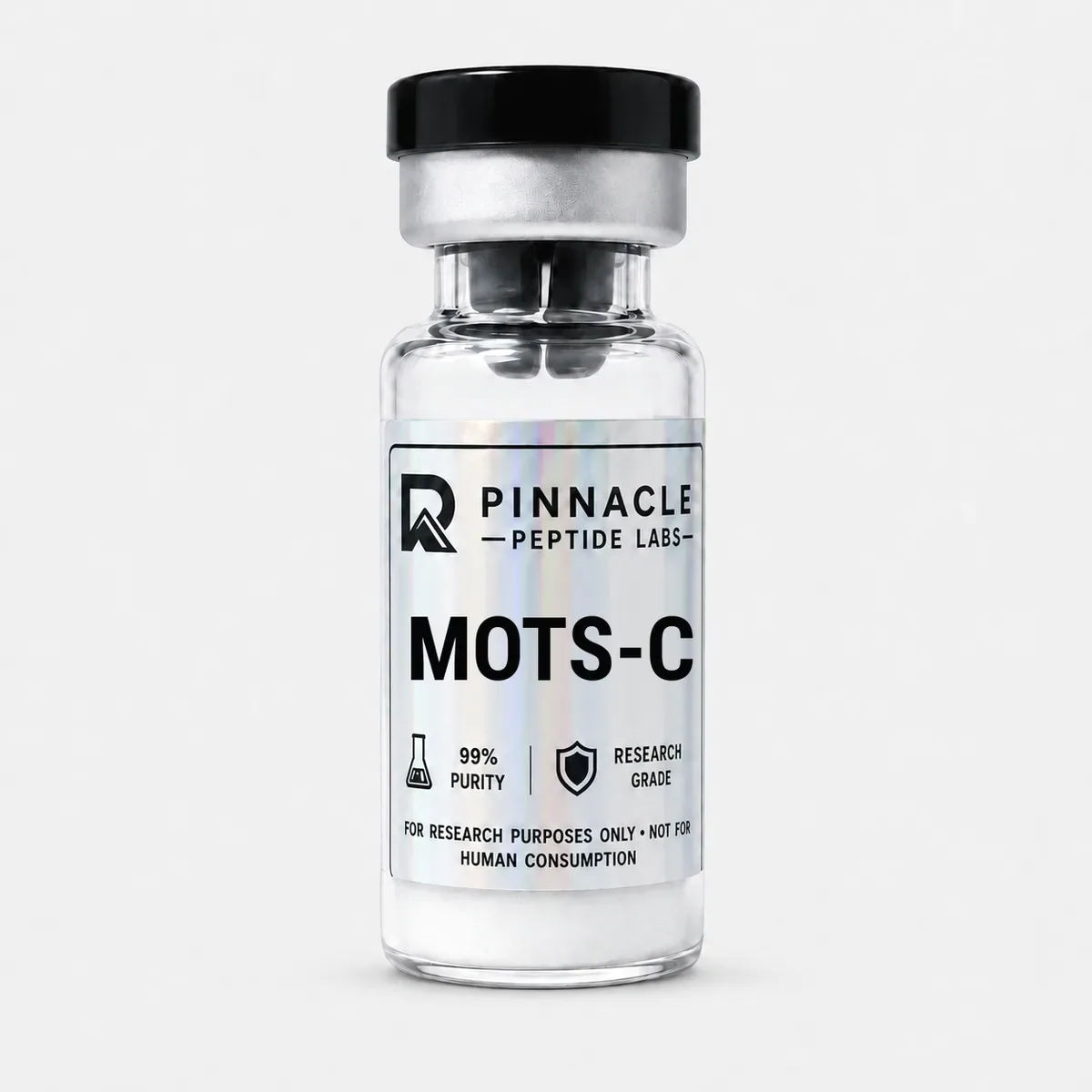
MOTS-C 10mg
COA included, doctoral chemist tested
A 16-residue mitochondrial-derived peptide studied within cellular-metabolism and AMPK-signaling research.
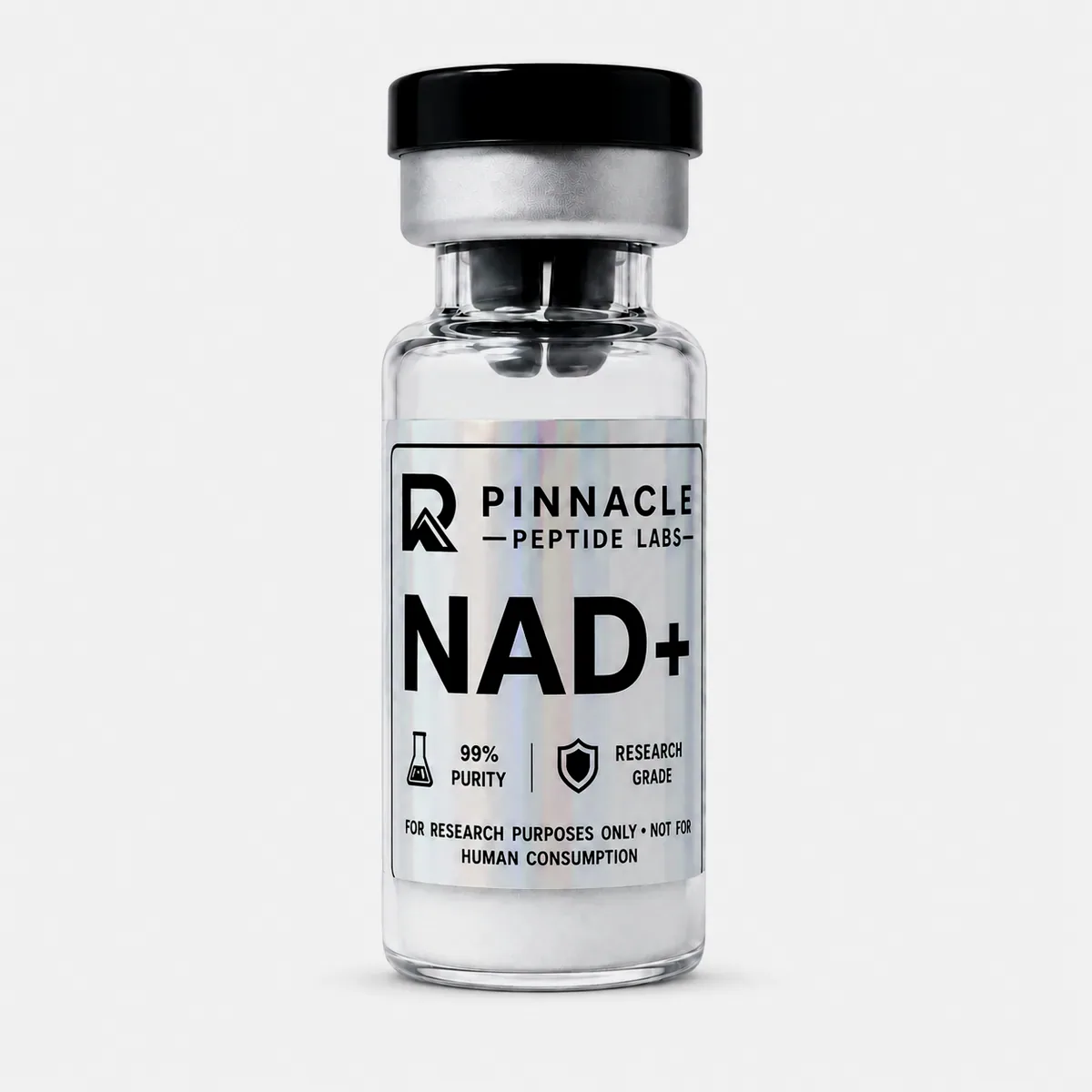
NAD+ 500mg
COA included, doctoral chemist tested
A coenzyme central to cellular metabolism and redox biology, studied within mitochondrial and sirtuin research.