How Research Peptides Are Tested: HPLC and Mass Spec
Research peptides are characterized mainly by two independent analytical methods: high-performance liquid chromatography (HPLC), which measures how pure the sample is, and mass spectrometry (MS), which confirms that the molecule is the intended one by measuring its mass. A complete testing report pairs these with physical checks such as appearance and, for many peptides, water and counterion content. Together they establish that a specific production lot is both the right compound and free of significant impurities, which is the whole point of characterized research material.
HPLC: measuring purity
High-performance liquid chromatography pushes a dissolved sample through a packed column under high pressure. Different molecules travel through the column at different speeds, so the components of the sample emerge separated in time, each producing a peak on a chromatogram. The target peptide is the dominant peak; the smaller peaks are impurities.
Purity is read from the relative areas of those peaks: the target peak's area as a fraction of the total is the purity figure a testing report quotes. Reverse-phase HPLC is the workhorse variant for peptides. Because it separates by physical behavior, HPLC is excellent at telling you how much of a sample is the main component, but on its own it cannot prove which molecule that component actually is.
Mass spectrometry: confirming identity
Mass spectrometry answers the question HPLC leaves open. It ionizes the peptide and measures its mass-to-charge ratio with high precision, yielding an observed molecular mass. That observed mass is compared against the theoretical mass calculated from the intended amino acid sequence.
When the observed and theoretical masses agree within tolerance, the molecule's identity is confirmed: it is the sequence it claims to be, not a different peptide of similar size. Techniques such as electrospray ionization are commonly used for this. Identity confirmation is what separates a verified peptide from a sample that is merely pure at something.
The supporting tests
Purity and identity are the headline results, but a thorough report includes more. Appearance is recorded as a physical description, for example a white lyophilized powder, which is a first-line sanity check on the material.
Many reports also quantify residual water content (often by Karl Fischer titration), because leftover moisture affects both stability and how the stated net peptide weight is interpreted. The counterion or salt content, such as residual acetate or trifluoroacetate from synthesis, may be reported for the same reason. These figures explain why the mass on the label and the mass of pure peptide are not always identical.
Why two methods are needed, not one
The reason a credible report carries both HPLC and MS is that each answers a question the other cannot. A sample can be highly pure and still be the wrong molecule; it can be the right molecule and still be contaminated with truncated sequences. Only purity and identity together characterize a peptide.
This is also why independent, third-party testing matters more than an in-house claim. Data generated by a party with no stake in the result is verifiable evidence rather than a marketing figure, and a report tied to the exact production lot is the only version that describes the material actually in your hand.
All products are intended strictly for in-vitro laboratory research and development use only. Not for human or veterinary use, not a drug, food, or cosmetic, and not intended to diagnose, treat, cure, or prevent any disease.
Related research peptides
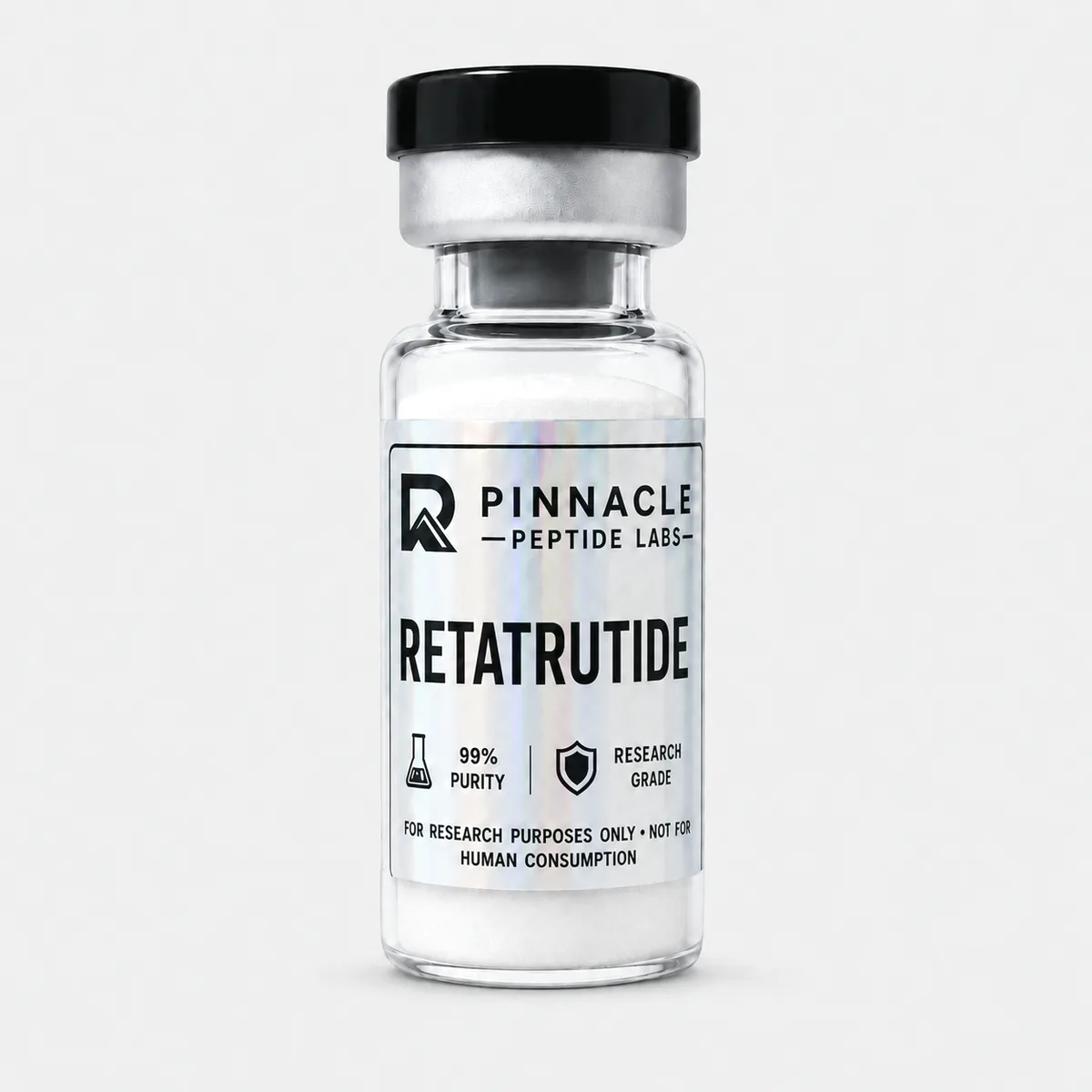
GLP-3RT 20mg
COA included, doctoral chemist tested
A next-generation triple-receptor agonist studied within metabolic, glucose-regulation, and energy-homeostasis research pathways.
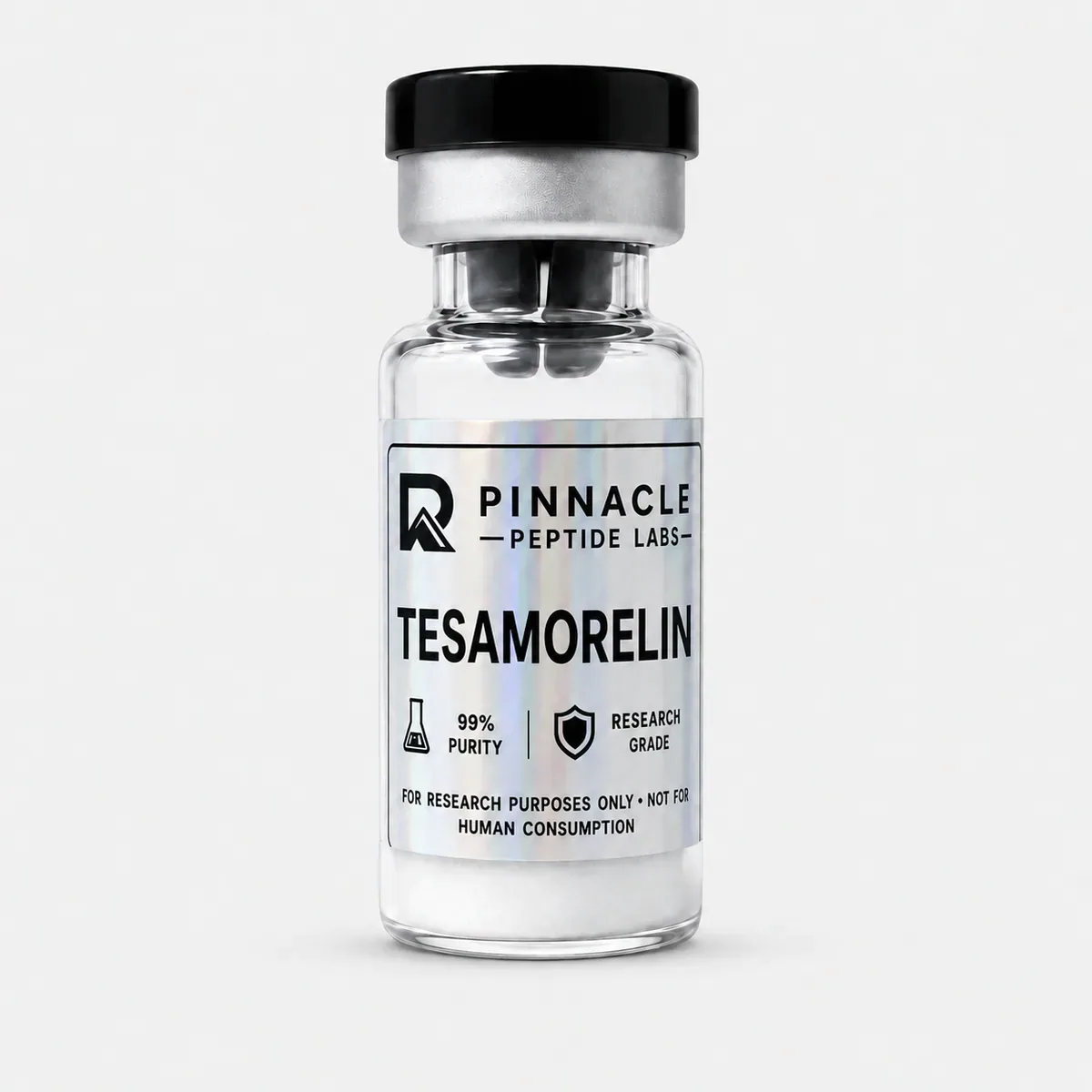
Tesamorelin 10mg
COA included, doctoral chemist tested
A stabilized growth hormone-releasing factor analog studied for its effects on GH secretion pathways in laboratory models.