First-Time Research Peptide Buyer Guide and Checklist
For a first research peptide purchase, work through a short checklist before ordering: confirm the supplier provides a third-party Certificate of Analysis matched to the exact lot you receive, check that the stated purity threshold is measured by HPLC, verify identity is confirmed by mass spectrometry, and read the handling and storage documentation. Treat human-use or dosing claims, missing or generic Certificates of Analysis, and reports that are not matched to a lot as red flags. Everything on this site is supplied for laboratory research use only.
Start with the Certificate of Analysis
For a first purchase, the single most useful habit is to look for the paperwork before the product. A Certificate of Analysis (COA) is the independent record of what a specific lot actually contains, and a supplier that publishes lot-matched COAs is letting you verify the material rather than take it on trust.
Check that the COA can be tied to the exact lot number you will receive, not a generic sample. A report that is not lot-matched tells you about some past batch, not the vial in front of you, because purity and identity can vary between production runs.
Check the purity threshold and identity confirmation
Confirm two things on that documentation. First, a stated purity threshold: the minimum percentage, measured by HPLC, that each released batch is held to. A supplier that publishes a clear threshold is committing to a standard rather than leaving purity undefined.
Second, identity confirmation by mass spectrometry. Purity tells you how much of the sample is the main component; identity tells you the main component is the right molecule at all. A first-time buyer should expect both, because one without the other is only half the picture.
Confirm the documentation you will need
Beyond the COA, look for the practical information a research workflow depends on: how the material should be stored, what solvent it reconstitutes with, and how it will be shipped. Clear handling guidance is a sign that a supplier expects the material to be used as characterized research material.
It is worth testing the support experience before a larger order. A supplier that can quickly produce a specific lot's COA and answer a handling question treats documentation as part of the product, which is exactly the posture a first-time buyer wants to find.
Red flags to walk away from
Some signals should end the evaluation. Any human-use, dosing, or therapeutic benefit claim is both a compliance problem and a credibility problem, because research material is not sold for those purposes. A missing COA, or one that cannot be matched to your lot, removes your ability to verify anything.
Other warning signs include vague or absent purity standards, no mention of independent testing, and pricing or claims that are out of step with how legitimate research suppliers present themselves. When the documentation is thin and the claims are loud, the safe move is to walk away.
All products are intended strictly for in-vitro laboratory research and development use only. Not for human or veterinary use, not a drug, food, or cosmetic, and not intended to diagnose, treat, cure, or prevent any disease.
Related research peptides
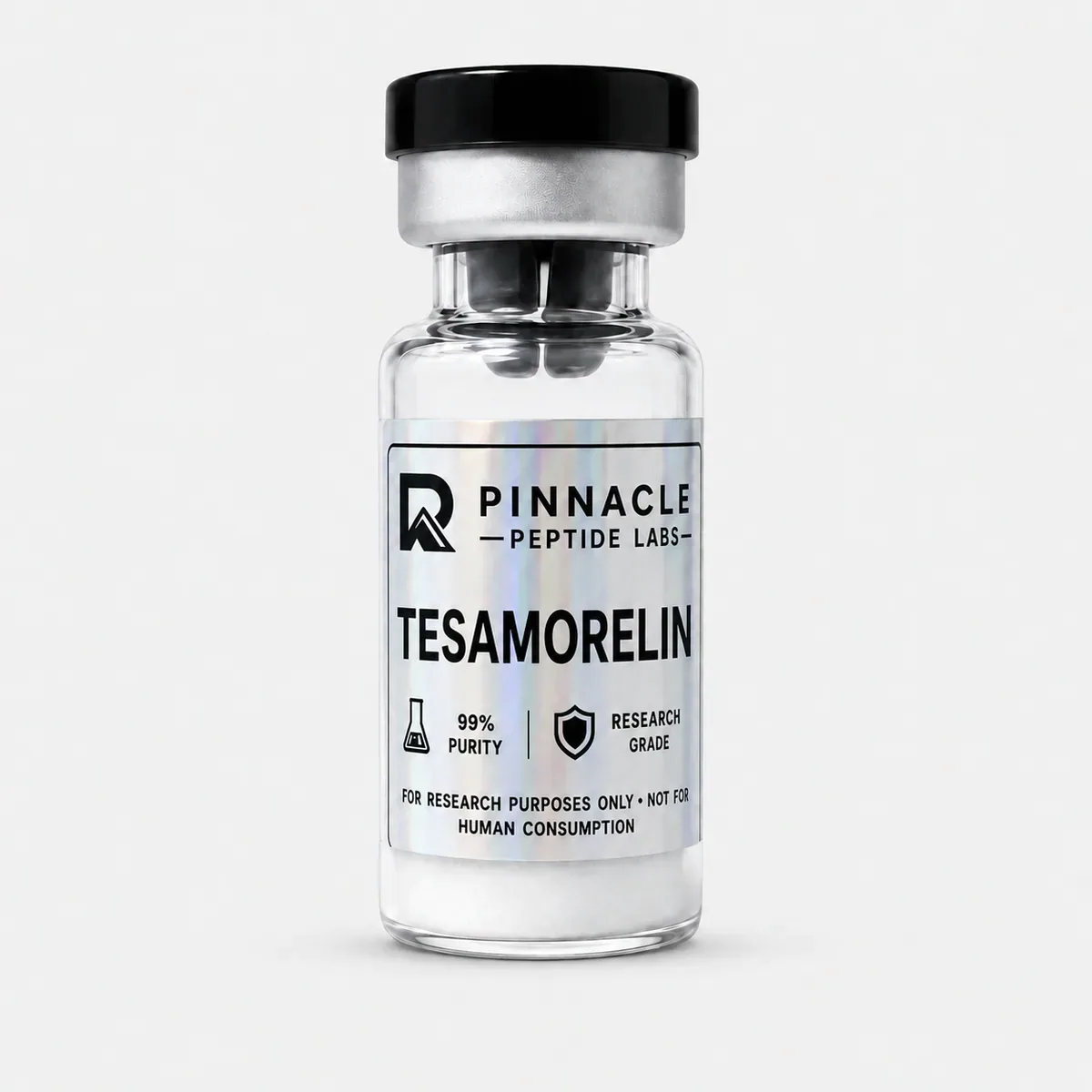
Tesamorelin 10mg
COA included, doctoral chemist tested
A stabilized growth hormone-releasing factor analog studied for its effects on GH secretion pathways in laboratory models.