Epithalon vs NAD+: A Research Comparison
Epithalon and NAD+ are both studied in longevity research but belong to entirely different molecular classes. Epithalon is a synthetic tetrapeptide studied within telomere biology and cellular senescence, chiefly in preclinical and limited clinical literature. NAD+ is a dinucleotide coenzyme, not a peptide, central to redox metabolism and sirtuin enzymology, whose precursors have been studied in human clinical research. The canonical difference is peptide versus coenzyme. Both are supplied for research use only.
The core difference: peptide vs coenzyme
The two are fundamentally different kinds of molecule that reach longevity biology from different directions. Epithalon is a four-amino-acid peptide (alanine-glutamate-aspartate-glycine), a synthetic analog of the pineal peptide epithalamin, studied as a tool compound for telomerase activity and cellular senescence. NAD+ (nicotinamide adenine dinucleotide) is a coenzyme that carries electrons in redox reactions and serves as a required substrate for sirtuin and PARP enzymes. One is a signaling peptide; the other is a metabolic cofactor consumed in enzymatic reactions.
Structure and molecular profile
Epithalon (molecular weight near 390.4 g/mol) is a synthetic tetrapeptide. NAD+ (molecular weight near 663.4 g/mol) is a dinucleotide coenzyme, distinct from its reduced form NADH and from the phosphorylated NADP; confirm the exact form and salt against the Certificate of Analysis, since the reduced and oxidized forms are not interchangeable in research.
Clinical and regulatory context
NAD+ metabolism is an active area of human clinical research: NAD+ precursors such as nicotinamide riboside and nicotinamide mononucleotide have been investigated in clinical trials within metabolism and aging biology. Epithalon has been studied chiefly in preclinical work and in a smaller body of clinical literature, much of it from Russian research groups associated with the St. Petersburg Institute of Bioregulation and Gerontology, and is not an approved therapeutic. Neither compound is an approved medicine, and both are supplied as research-use-only materials.
How each is studied
Research with Epithalon examines telomerase and telomere length, circadian and pineal signaling, and senescence markers. Research with NAD+ examines redox balance, sirtuin and PARP activity, mitochondrial function, and DNA-repair models. They appear together in longevity contexts but answer different questions, so a protocol chooses Epithalon for telomere and pineal-axis work and NAD+ where cellular energy metabolism or sirtuin biology is the focus.
All products are intended strictly for in-vitro laboratory research and development use only. Not for human or veterinary use, not a drug, food, or cosmetic, and not intended to diagnose, treat, cure, or prevent any disease.
Related research peptides
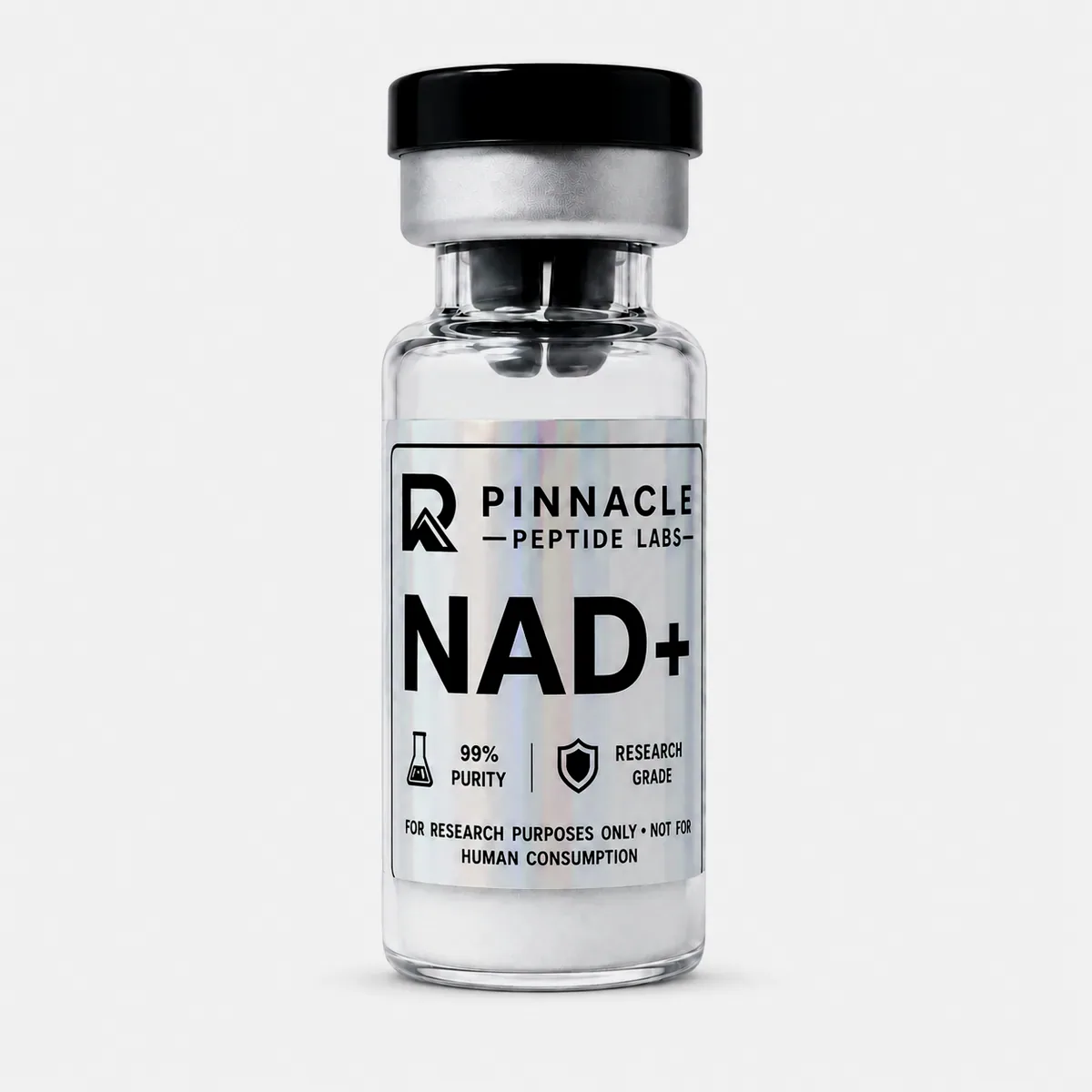
NAD+ 500mg
COA included, doctoral chemist tested
A coenzyme central to cellular metabolism and redox biology, studied within mitochondrial and sirtuin research.