Epithalon: Research Overview and Mechanism
Epithalon (epitalon) is a synthetic tetrapeptide with the sequence Ala-Glu-Asp-Gly (AEDG), studied in laboratory and preclinical research within telomere biology, circadian and pineal regulation, and cellular-senescence models. It is a compact analog of the pineal peptide epithalamin, supplied as a lyophilized powder for research use only and is not approved for human use. This overview reports how the tetrapeptide is characterized in the research record, not a therapeutic outcome for any individual.
What Epithalon is
Epithalon is a four-amino-acid peptide, alanine-glutamate-aspartate-glycine (AEDG, molecular formula C14H22N4O9, near 390.4 g/mol), developed as a synthetic analog of epithalamin, a peptide preparation associated with the pineal gland. Its short length makes it straightforward to synthesize precisely and to characterize analytically, which is part of why it is a frequently referenced tool compound in longevity-research literature.
Because it is a defined synthetic tetrapeptide, its identity is confirmed by mass spectrometry and its purity measured by HPLC, the same characterization applied to larger research peptides. It is also highly hydrophilic, so it dissolves in aqueous buffer without needing an organic co-solvent.
Pathways it is studied within
In research models, Epithalon is studied within telomere biology, where its investigated mechanism centers on the regulation of telomerase activity and the expression of the catalytic telomerase reverse transcriptase (hTERT) subunit in cultured cells. It is also examined within pineal and circadian regulation, reflecting its origin as an analog of the pineal preparation epithalamin, and within gene-expression and cellular-senescence endpoints.
Epithalon and the epithalamin preparation it models have additionally been the subject of human clinical-gerontology research reported in the Russian peptide-bioregulator literature. That body of work is described here in the third person as published research, not as evidence of an effect for any individual, and none of these pathways is a therapeutic claim.
Handling and documentation
Pinnacle Epithalon ships as a lyophilized powder with a lot-matched Certificate of Analysis reporting HPLC purity of 99% or higher and a mass-spectrometry identity check against the theoretical 390.4 g/mol mass of the C14H22N4O9 tetrapeptide. Store the sealed vial at -20C and keep it shielded from light.
Because AEDG is a short, highly hydrophilic four-residue sequence it dissolves readily in bacteriostatic water, but the reconstituted solution is still less stable than the dry powder: refrigerate it, aliquot to avoid repeated freeze-thaw cycles, and reconcile CAS 307297-39-8 against the COA before recording a molecular weight. See our reconstitution and storage guide for detail.
All products are intended strictly for in-vitro laboratory research and development use only. Not for human or veterinary use, not a drug, food, or cosmetic, and not intended to diagnose, treat, cure, or prevent any disease.
Related research peptides
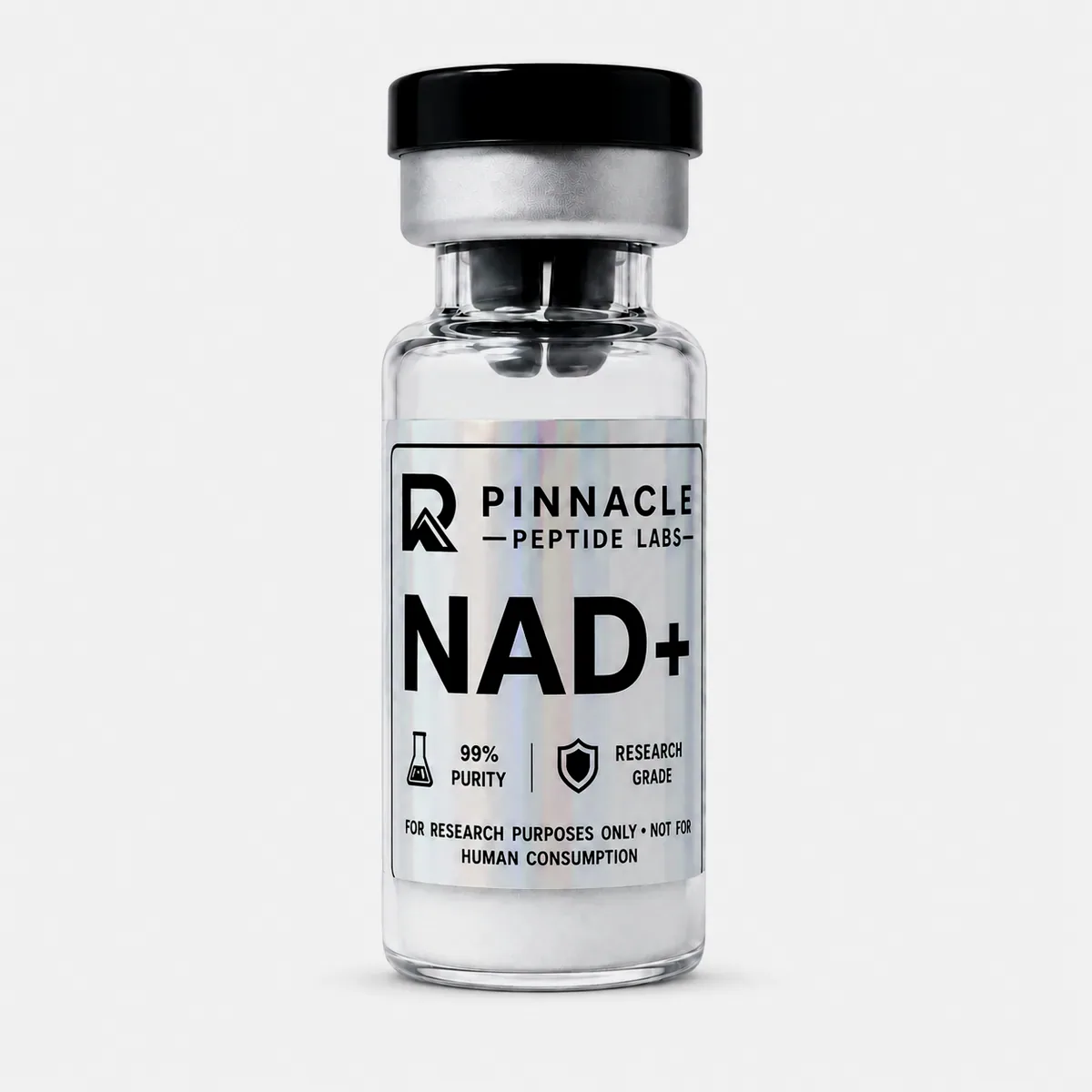
NAD+ 500mg
COA included, doctoral chemist tested
A coenzyme central to cellular metabolism and redox biology, studied within mitochondrial and sirtuin research.