BPC-157 and TB-500: Tissue-Repair Research Overview
BPC-157 and TB-500 are peptides studied in laboratory and preclinical research for their roles in angiogenesis, cell migration, and tissue-repair pathways. GHK-Cu, a copper-binding peptide, is studied for extracellular-matrix remodeling. These three appear together in tissue-repair research blends such as GLOW-70. All are for research use only and are not approved for human use.
BPC-157 in research
BPC-157 is a synthetic peptide studied in preclinical models for its association with angiogenesis (the formation of new blood vessels) and cellular repair processes. It is a frequently referenced tool compound in tissue-repair research literature.
TB-500 in research
TB-500 is a synthetic version of a fragment of thymosin beta-4, studied for its role in cell migration and actin regulation, mechanisms relevant to how tissue reorganizes during repair in research models.
GHK-Cu and the GLOW-70 blend
GHK-Cu is a copper-binding tripeptide studied for extracellular-matrix remodeling and its characteristic role in skin and connective-tissue research. Because these three peptides are studied across complementary repair pathways, they are combined in research blends such as GLOW-70, which reconstitutes to a blue solution from the copper component.
All products are intended strictly for in-vitro laboratory research and development use only. Not for human or veterinary use, not a drug, food, or cosmetic, and not intended to diagnose, treat, cure, or prevent any disease.
Related research peptides
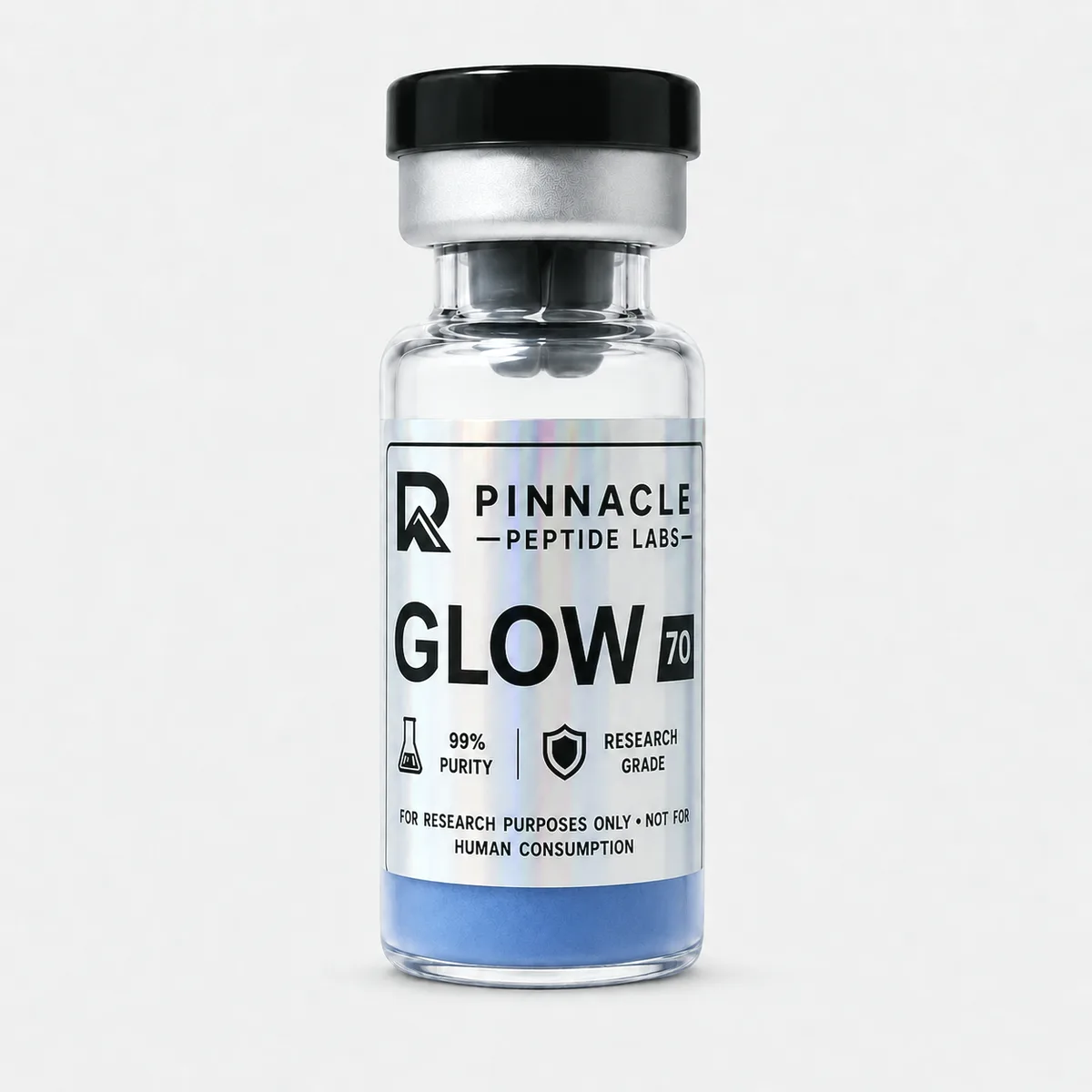
GLOW-70 70mg Blend
COA included, doctoral chemist tested
A tri-peptide research blend combining GHK-Cu, BPC-157, and TB-500, studied for tissue-repair and cellular-regeneration pathways.