BPC-157: Research Overview and Mechanism
BPC-157 is a synthetic pentadecapeptide derived from a partial sequence of a gastric protein, studied in laboratory and preclinical research within angiogenesis, cytoprotection, and tissue-repair pathways. It is one of the most frequently referenced tool compounds in tissue-repair research literature. It is supplied as a lyophilized powder for research use only and is not approved for human use.
What BPC-157 is
BPC-157 (Body Protection Compound-157) is a synthetic 15-amino-acid peptide corresponding to a partial sequence of a protective protein identified in gastric juice. Its 15-residue length is why it is described as a pentadecapeptide in research literature.
It is a stable peptide used as a tool compound for probing repair-associated pathways in laboratory models, distinct from the larger growth-factor proteins that also participate in tissue repair.
Pathways it is studied within
In preclinical models, BPC-157 is studied for its association with angiogenesis (the formation of new blood vessels), cytoprotection, and cellular-repair processes, including in gastrointestinal-model research. Mechanistic work in these models has associated its pro-angiogenic activity with the VEGFR2 signaling pathway and with modulation of the nitric-oxide system, and its cytoprotective activity with growth-factor and focal-adhesion (FAK-paxillin) signaling. This body of work is predominantly preclinical and animal-model literature describing the molecule, not human outcomes.
Because these pathways are complementary to those studied for TB-500, the two peptides are combined in tissue-repair research blends such as Wolverine and GLOW-70.
Handling and documentation
Pinnacle BPC-157 is supplied as a 5mg lyophilized powder (CAS 137525-51-0) with a lot-matched Certificate of Analysis reporting HPLC purity and mass-spectrometry identity against its roughly 1419.5 g/mol mass. Its C62H98N16O22 sequence contains no cysteine, so unlike copper or disulfide peptides it carries no color or bridge chemistry and reconstitutes to a clear solution. Store the powder at -20C protected from light, and add bacteriostatic water down the vial wall rather than shaking.
All products are intended strictly for in-vitro laboratory research and development use only. Not for human or veterinary use, not a drug, food, or cosmetic, and not intended to diagnose, treat, cure, or prevent any disease.
Related research peptides
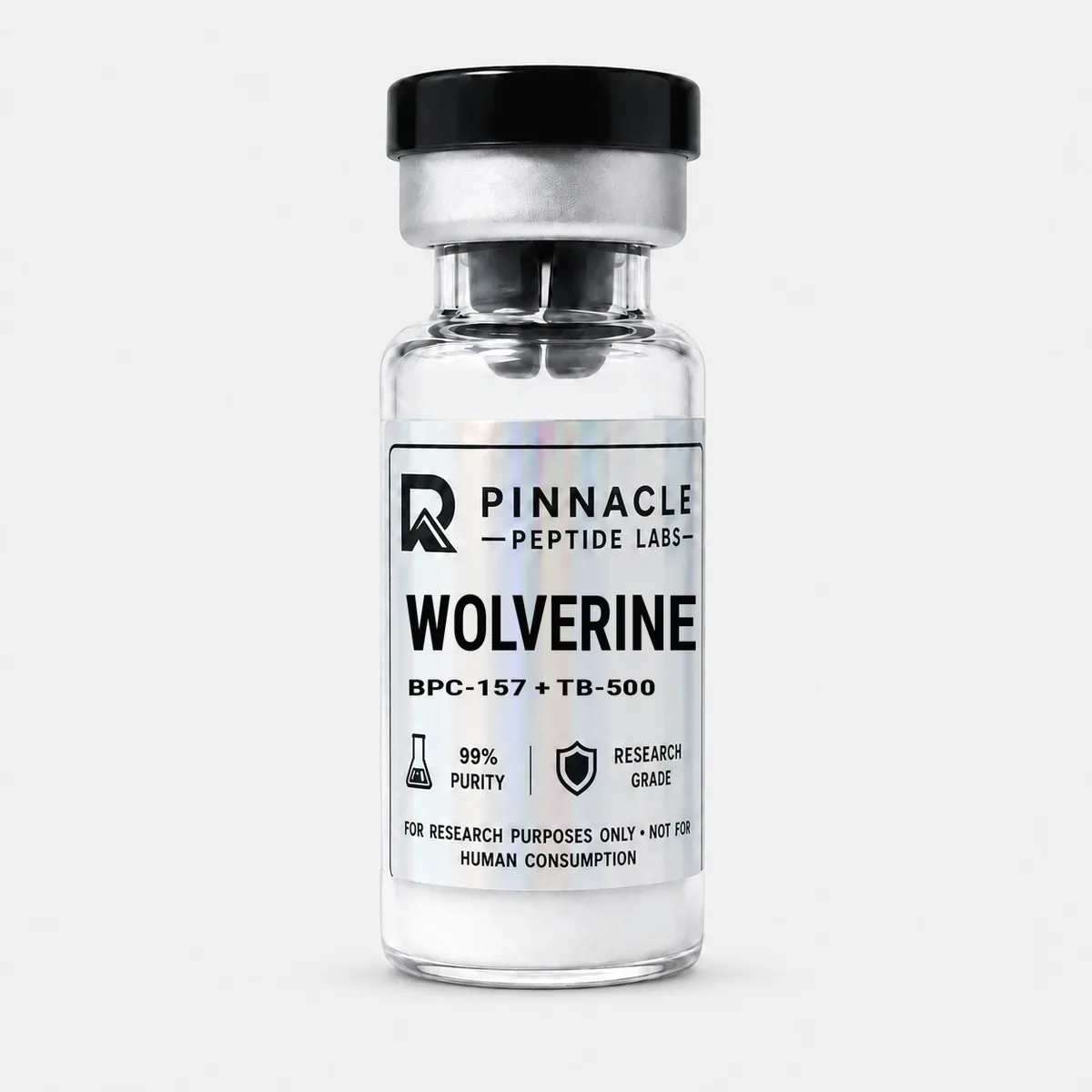
Wolverine 20mg Blend
COA included, doctoral chemist tested
A two-component research blend of BPC-157 and TB-500, studied across complementary tissue-repair pathways.
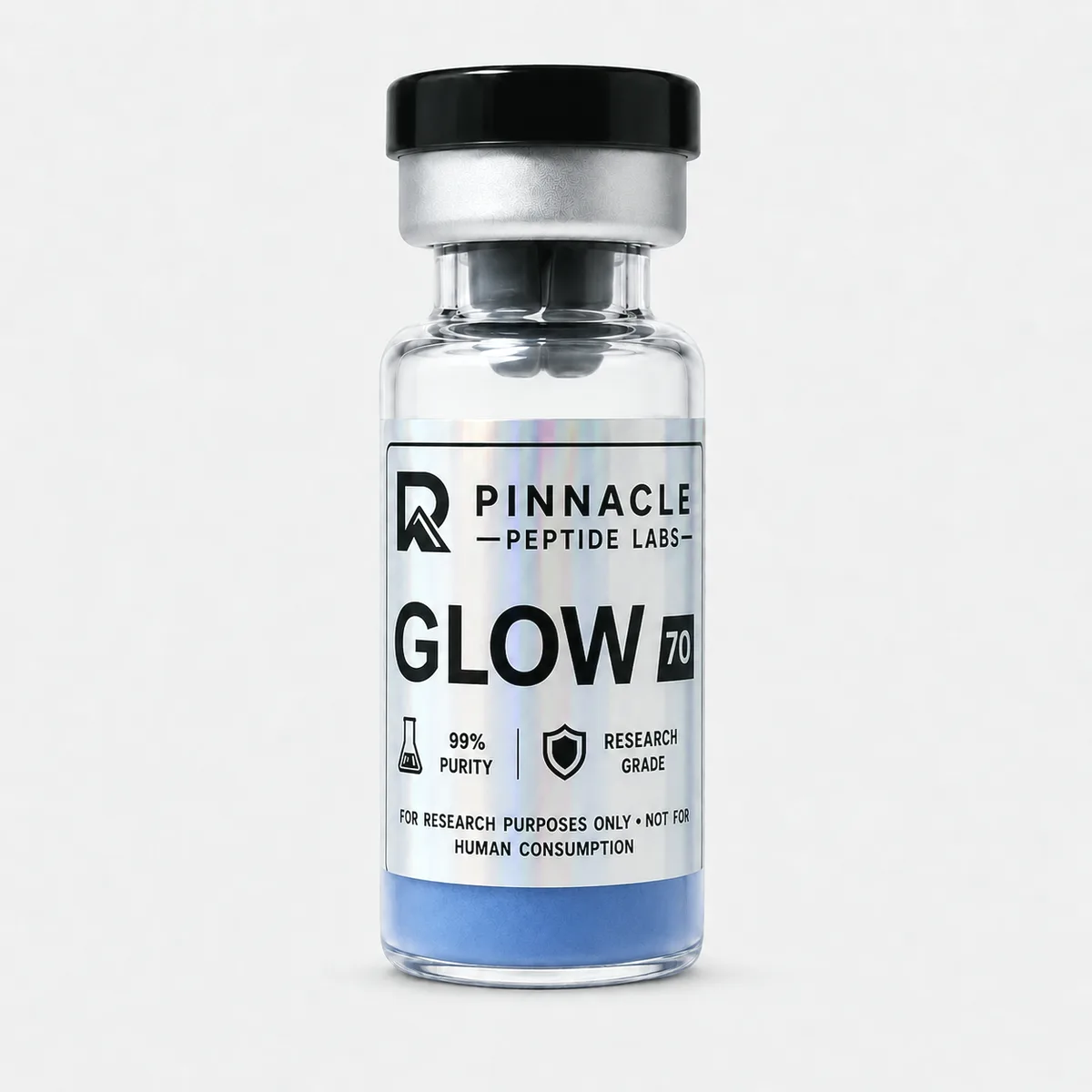
GLOW-70 70mg Blend
COA included, doctoral chemist tested
A tri-peptide research blend combining GHK-Cu, BPC-157, and TB-500, studied for tissue-repair and cellular-regeneration pathways.